Anaphoric that considered harmful
Language Log 2015-09-02
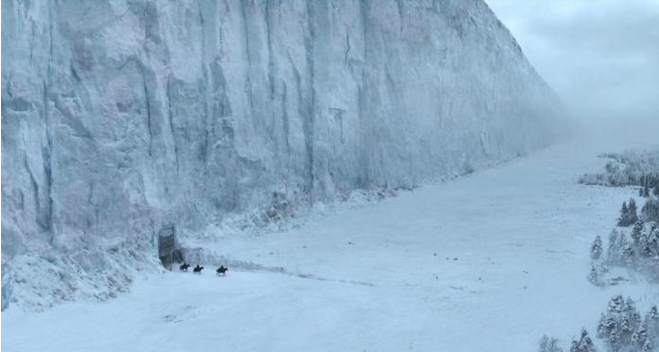 Scott Walker recently got into a little trouble for a preposterous proposal that he put forward on Meet the Press. The headlines tell the story: "Scott Walker: Canada-U.S. border wall worth considering", CNBC News; "Scott Walker: U.S.-Canada wall a 'legitimate' idea", CNN; "Scott Walker says wall along Canadian border is worth reviewing", AP.
Except that Walker never made any such proposal.
What can we learn from this, besides reinforcing the obvious generalization that we need a better press corps? Here's a simple version: Politicians should avoid using words like "that" to refer to general concepts in the previous discourse.
This lesson was exemplified in an earlier election cycle by the whole "You didn't build that" foofaraw. And Walker's misstep lets us add another clause to the warning:
Especially avoid anaphoric that when you're responding to an interviewer who adds a problematic potential referent after you start talking.
Here's what happened. We're about 9:24 into a half-hour interview, Chuck Todd questioning Scott Walker, and Todd turns to border security. He asks
All right, let's go to your foreign policy speech. I found it interesting that the first thing you brought up in your foreign policy speech was securing the border and you said that that was basically your number one priority, uh and that you're concerned about terrorists coming over the border. The most famous uh incident that we had of terrorists coming over a border was on our northern border. Why aren't we talking about securing the northern border?
Walker dodges the question, and responds instead about the border between Mexico and Texas:
Well I think we need to secure uh- borders in general, we spend all this money on T S A, um and I think right now one of the most rampant spots is on our southern-based border. When I was there earlier this year with governor Abbott in his Texas public safety they actually showed us the list of people- these are just people they have actually caught, not the many others that probably are going across the border, the people they have caught from places far beyond Mexico, far beyond Latin America, and I think it does raise some very legitimate concerns – we're spending {cough} excuse me, millions of dollars on T S A at our airports and we're spending all sorts of money on port security, it only makes sense to me that if part of what we're trying to do is protect our self, set aside immigration for a minute, but protect our selves from risk out there I think we should make sure we have a secure border.
Todd persists:
But am I- why are we always talking about the southern border, [Walker: I-] and building a fence there, we don't talk about our northern border [Walker: I- I've been talking about] where if this is about- if this is about securing the border from islam- from potentially terrorists coming over. [Walker: Well we-] Do you want to build a wall north of the border too?
Walker starts trying to answer the question three times while Todd continues talking over him, and Todd mentions "a wall north of the border" only at the end of the question. When Walker finally gets his turn, he says [emphasis added]:
Some people have asked us about that in New Hampshire, they raised some very con- uh some very legitimate concerns including some law enforcement folks that brought that up to me at one of our town hall meetings about a week and a half ago, so that is a legitimate issue for this [sic] to look at.
Here's the audio for the whole sequence:
Your browser does not support the audio element.
When Walker says "Some people have asked us about that in New Hampshire", and "some law enforcement folks … brought that up to me", and "that is a legitimate issue for us to look at", he obviously intends the deictic pronoun that to refer to the general concept of northern border security, not to the specific idea of building a wall, which is somewhat more preposterous in the case of the U.S.-Canada border than in the case of the U.S.-Mexico border. (And crucially, the Great Wall of Canada is preposterous in politics as well as in reality, because there's no political panic about hordes of invading Canadians…)
But because of the ambiguity of anaphoric that, what should have been an anodyne and essentially contentless response ("yes, northern border security is a legitimate issue") turned into the Scott Walker News Item of the week, starting with everyone having a good laugh over the Great Wall of Canada, and then reporting the explanations from Walker's campaign, generally treated as "walking back" a misstatement rather than correcting a misunderstanding.
Thus Mark Murray, "Walker: 'I've Never Talked About a Wall' at Canadian Border", NBC News 9/1/2015:
Is Scott Walker walking back his suggestion on Sunday that building a wall or fence on the U.S.-Canadian border is a "legitimate issue"?
It sure looks that way.
As Ronald Reagan (?) said, "When you're explaining, you're losing."
The full Meet The Press interview is here (warning: autoplay ad) — the Great Wall of Canada segment starts around 9:24.
Note that this post risks endorsing a prescriptivist concern about the vagueness of what Arnold Zwicky has called "summatives". In a series of post a few years ago, we were generally skeptical of these concerns:
"Why are some summatives labeled 'vague'?", 5/21/2008 "More theory trumping practice", 5/22/2008 "Clarity, choice, and evidence", 5/23/2008 "Poor pitiful which", 5/23/2008 "A test kitchen for stylistic recipes", 6/1/2008
But today we're talking about political speech, where opponents (and journalists) will try hard to misconstrue statements as meaning something attackable. And anyhow, we've basically in favor of Prescriptivist Science — or we would be, if it existed.