Fair Use Supports Accessibility, but You Don’t Have to Take My Word for It
peter.suber's bookmarks 2026-02-25
Last Updated on February 24, 2026, 5:20 pm ET
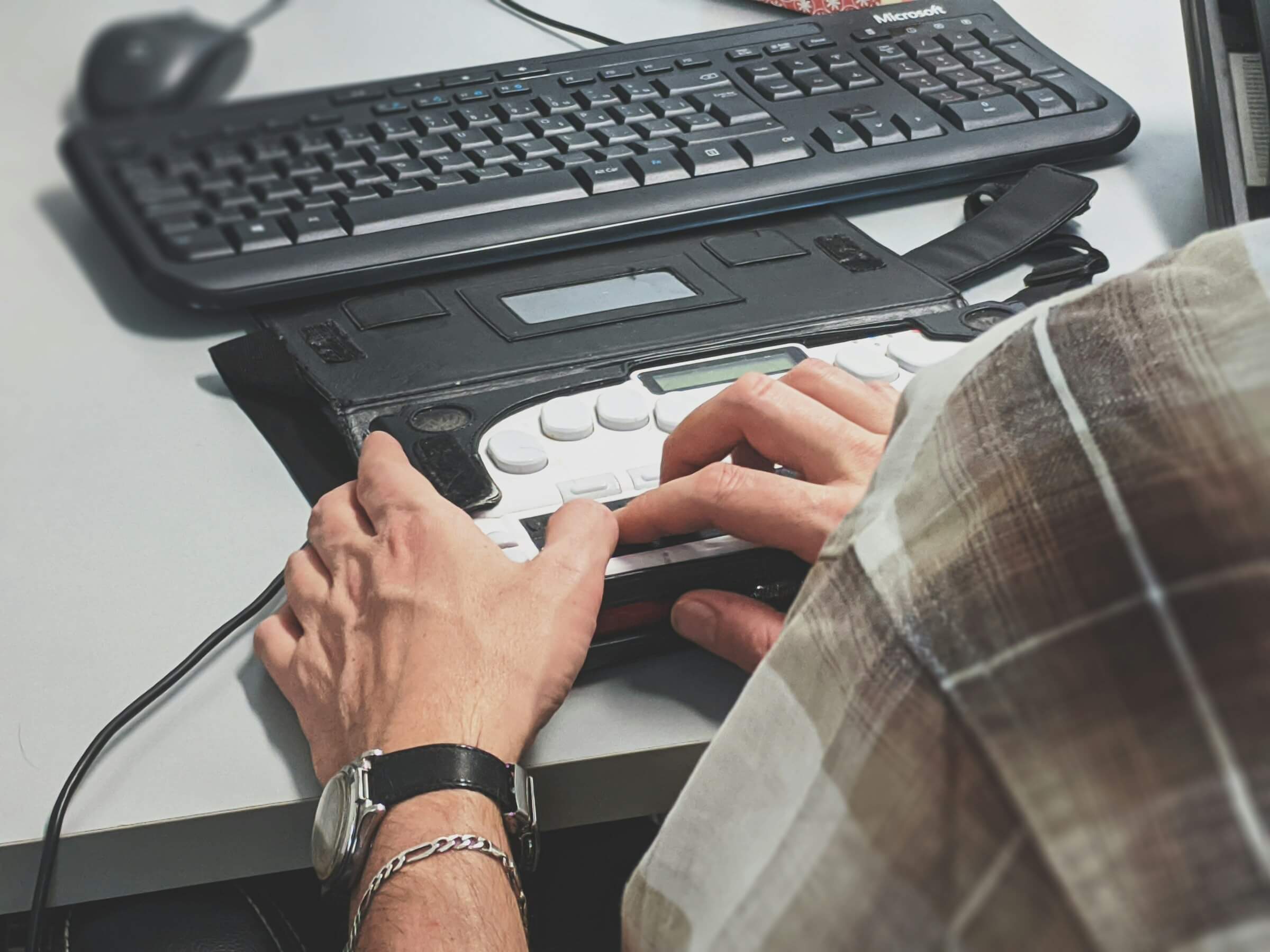 Photo by Sigmund on Unsplash
Updated Americans with Disabilities Act (ADA) Title II regulations will take effect on April 24, requiring state and local government websites and digital content to meet accessibility standards. As libraries prepare to meet these requirements, questions often arise at the intersection of copyright and disability law. This Fair Use Week, I’m exploring three ways copyright law facilitates accessibility. And as the title of this post suggests, you don’t have to take my word for it—I’ll cite authoritative resources that you can put to work in your library’s accessibility efforts, including The Law and Accessible Texts, which I hope becomes a resource you reach for often!
Libraries can rely on fair use to remediate electronic works, even if there is no contractual agreement to do so
Copyright warnings can sometimes lead librarians and disability services organizations (DSOs) to second-guess whether explicit permission in a license or contract is needed in order to remediate works that are not available in accessible formats. But Congress and courts have affirmed that libraries and DSOs in institutions of higher education can rely on fair use to make copies for people with disabilities.
Fair use is a flexible right in copyright law that allows for the use of copyrighted works without permission from a copyright holder, in certain circumstances. When codifying fair use in the Copyright Act of 1976, Congress acknowledged that publishers do not often produce accessible copies for people with disabilities, and therefore making copies of works in special formats for blind people is an illustrative application of the fair use doctrine.
While Congress specifically referred to blindness, courts subsequently affirmed that this was meant to be an example rather than a narrow interpretation of fair use. In 2014, the US Court of Appeals for the Second Circuit in the case Authors Guild v. HathiTrust determined that libraries can rely on fair use to create a digital repository of copyrighted works, and provide full digital access to those works in formats accessible to patrons with print disabilities. The court referenced the obligation that libraries of educational institutions have under the ADA, suggesting that fair use may apply more broadly to people with a range of disabilities, and to formats beyond print.
Copyright law supports remediation, but contractual terms can be a separate matter. If a contract prohibits remediation, consult your legal counsel for advice. You can also inform the vendor that they are not in compliance with the ADA. For more on licensing for accessibility, see E-resource Licensing Explained.
Libraries can create accessible versions, even if an eligible person does not request an accessible version
Section 121 of the Copyright Act permits “authorized entities” to make accessible format copies of work for the benefit of “eligible persons.” The phrase eligible person may give librarians pause, creating uncertainty as to whether they must verify individual eligibility before remediating a work. Under US copyright law, libraries can prepare accessible versions of works that are likely to be in demand, even if an eligible person does not request an accessible version of that work. In fact, the updated ADA Title II regulations strengthen the case for libraries to anticipate that people with disabilities will need accessible versions of library resources that are most widely and consistently used.
The term “eligible persons” in copyright law is meant to expand the scope of disabilities covered by the law, not to introduce new verification requirements. This phrase was introduced into US copyright law in 2018 with the Marrakesh Treaty Implementation Act (MTIA), which amended the law in alignment with the Marrakesh Treaty, an international instrument designed to address the global shortage of books in accessible formats. The MTIA expanded copyright law’s coverage from “blind or other persons with disabilities” to “eligible persons,” a term that is defined in the law as being inclusive of people who are blind as well as people who have other print disabilities, including learning disabilities and mobility impairments that impede holding or reading a book.
DSOs often require students to register for services, but these institutional requirements should not become a barrier that overrides libraries’ broader obligations to provide accessible materials. According to the Code of Best Practice in Fair Use, coordinating with DSOs can only strengthen the fair use case for creating and retaining accessible copies for future use.
Libraries can create and retain accessible copies for future use, without requiring proof of purchase
In its fair use analysis in the HathiTrust case, the Second Circuit concluded that the observation made by Congress in 1976 remained true in 2014: publishers do not usually make their books available in specialized formats for the blind. But libraries should not construe the court’s discussion on this topic as requiring an authorized entity or a student to provide proof of purchase of materials as a predicate for providing or receiving an accessible one; in fact, such policies can reduce the incentive for publishers to produce born-accessible works. Libraries are also free to retain accessible copies indefinitely; the law imposes no requirement to destroy them at the end of a semester or at any other time. As Adler, Butler, and Cox point out in The Law and Accessible Texts, Section 121 as well as Section 108 of the Copyright Law assume that a copy will become the property of the recipient.
Use it or lose it
It’s understandable that libraries have questions about whether retaining remediated works qualifies as fair use—the Copyright Act does not offer explicit guidance on particular use cases, and while case law is valuable, the HathiTrust decision remains the only decision on this topic. But it matters that libraries actively exercise fair use and other copyright exceptions. Rights that go unexercised can weaken over time, both in practice and in how courts interpret them.
In the final rule on ADA Title II, the US Department of Justice (DOJ) said it “expects that as a result of this rulemaking, there will be an increase in demand for accessible content from third-party vendors, and therefore a likely increase in the number of third-party vendors that are equipped to provide accessible content.” Until then, libraries can rely on fair use and other rights to remediate works and retain those works in anticipation of future use, regardless of whether a request is made.
Sources
- Code of Best Practices in Fair Use for Academic and Research Libraries (January 2012, updated October 2025)
- Authors Guild v. HathiTrust Decision (June 2014)
- The Law and Accessible Texts (July 2019)
- Nondiscrimination on the Basis of Disability; Accessibility of Web Information and Services of State and Local Government Entities (April 2024)
- US House of Representatives, Committee on the Judiciary, Copyright Law Revision (1976)
Cross-posted on the H-Lib Copyright & Fair Use Forum, Harvard Library.
The post Fair Use Supports Accessibility, but You Don’t Have to Take My Word for It appeared first on Association of Research Libraries.