Court Rules in Favor of Public Access to Information
peter.suber's bookmarks 2026-04-13
Last Updated on April 13, 2026, 11:58 am ET
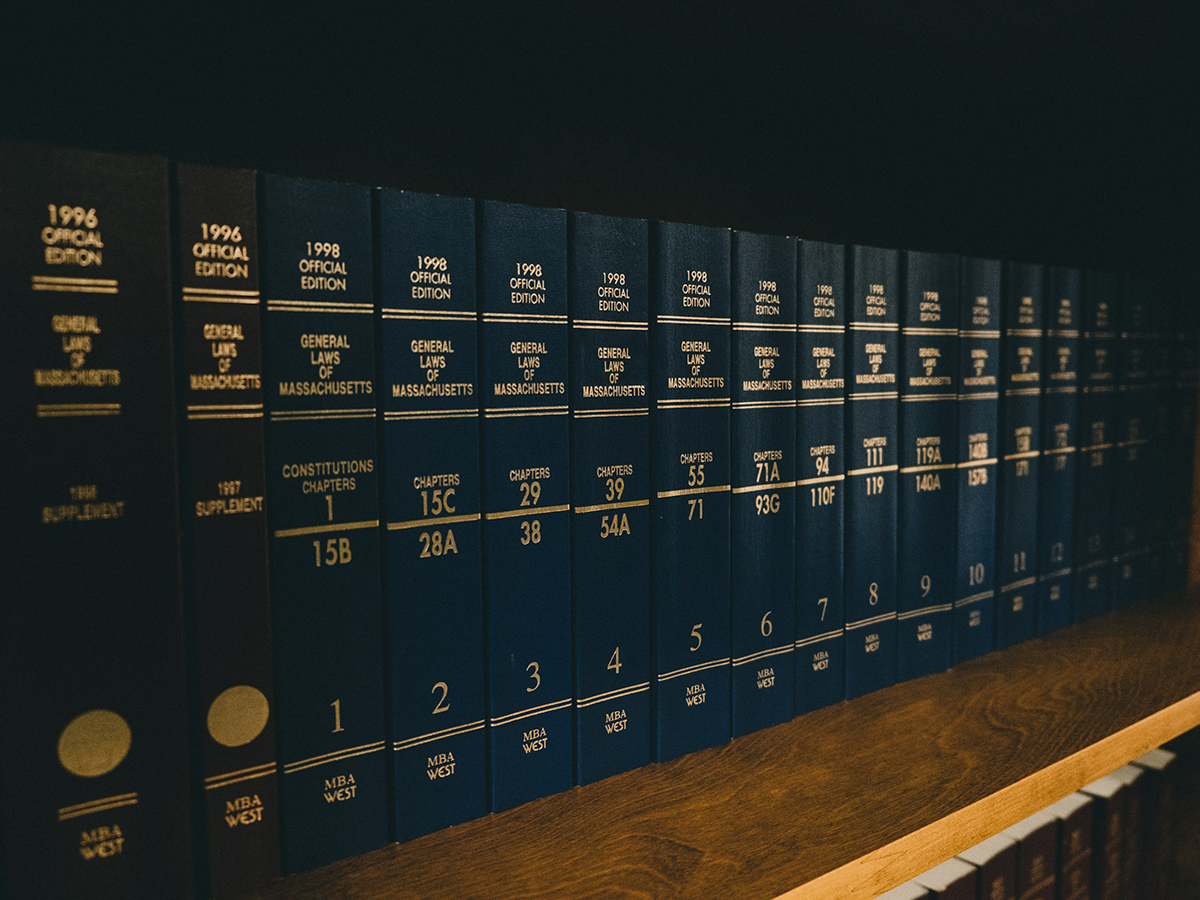 Photo by Nasser Eledroos on Unsplash
In a win for information advocates and the public, the US Court of Appeals for the Third Circuit ruled that the American Society for Testing & Materials (ASTM) was unlikely to succeed on its claim that online research platform UpCodes infringed copyright by posting ASTM building standards on its website.
UpCodes hosts a database of building codes and standards. ASTM, a private standards development organization, sued UpCodes for copyright and trademark infringement for publishing ASTM standards that have been incorporated by reference into law. In an earlier stage of the case, a district court denied ASTM’s motion for a preliminary injunction, reasoning that ASTM was unlikely to succeed on the merits because UpCodes’s copying constitutes fair use. On April 7, 2026, the third circuit agreed with the district court’s decision and denied the preliminary injunction.
In its fair use analysis, the third circuit upheld the district court’s conclusion that UpCodes’s use is transformative because it “achieves the distinct objective of making the law freely accessible and educating the public on the contents of binding laws.” The district court based its conclusion on ASTM v. Public.Resource.Org, a factually similar case in which the DC Circuit found that Public Resource’s online posting of hundreds of technical standards that were incorporated by reference into law was transformative because it “serve[d] a different purpose than the plaintiff’s works.
The third circuit was not convinced by ASTM’s argument that a work must be altered in order to be transformative, a position that overlooks the first factor’s focus on the purpose of the use. The court also rejected ASTM’s comparison to Internet Archive’s uses in Hachette Book Group Inc. v. Internet Archive, holding that UpCodes’s use goes beyond that required to qualify as a derivative: “Whereas IA’s purpose was limited to the publishers’ original purpose, UpCodes’s use has a distinct purpose: to disseminate the law.”
As for the second factor, the court determined that the nature of the work—factual technical standards—strongly supports fair use, and their incorporation into law moves them further to the periphery of copyright’s core protection. The third factor also favored UpCodes; the court held that it was reasonable for UpCodes to copy the entire standard in full, as that is necessary for people to interpret and use the law. Finally, the court determined that the likely market harm from UpCodes’s use appears limited, but viewed the fourth factor as equivocal.
ARL joined an amicus brief by the Electronic Frontier Foundation (EFF) in support of UpCodes, arguing that no private party can own the law or ration access to it. Amici include Public.Resource.org, Watch Duty, IFixIt, ALA, Public Knowledge, and Library Futures.
ARL has intervened in previous related litigation, including ASTM v. Public.Resource.org and State of Georgia v. Public.Resource.org, in which the US Supreme Court held that the government edicts doctrine forbids copyright restriction on laws incorporated by reference. Libraries and archives rely on the government edicts doctrine to provide public access to government information.
Members of Congress have also introduced bills that would explicitly extend copyright ownership to standards. ARL’s position has been that Congress does not need to act in order for nonprofits, startups, and libraries to provide functional and free public access to the law.
The post Court Rules in Favor of Public Access to Information appeared first on Association of Research Libraries.