Games Deregulators Play
Legal Planet: Environmental Law and Policy 2025-12-22
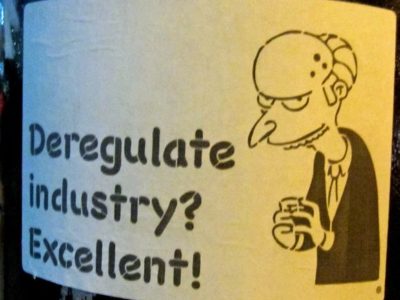
Every deregulation is different, of course, but there are stock arguments that seem to surface again and again. There’s a litany of legal arguments (citing Loper Bright, the Major Questions Doctrine, etc.) But there is also a menagerie of dubious policy arguments. The policy analysis also tends to be very slipshod and cursory, but that’s a topic for a different time.
Here are the half dozen policy arguments that the Administration favors the most.
SOWING DOUBT. “The harm is too uncertain.” One repeated move is to argue that potential harms are too uncertain. There’s always uncertainty in regulatory decisions, especially when new scientific findings are involved. The trick is to demand incontrovertible evidence before acting, which of course is never available.
EMBRACING MYOPIA. “The chain of causation is too long; the harms are too delayed and too far away.” Environmental regulation often involves problems that are long-term, involve complex causal chains, or happen at a distance. That’s just the way the natural world works. As with the first argument, this is basically an argument for ignoring valid science.
MAGNIFYING MAGNITUDES. “Regulatory costs are crushing..” In West Virginia v. EPA, the Supreme Court said that Congress has to be especially clear in delegating power to agencies in certain “extraordinary cases” involving “major questions.” The Trump Administration views every environmental regulation as an extraordinary case. Even when they don’t invoke the major questions doctrine, they consistently overplay regulatory costs.
FRACTURING FRACTIONS. “It’s an insignificant cause of the problem.” The idea is to be able to say that the actions in question contribute only a tiny percent of the total harm. This can easily lead to distorted results. If I told you that a chemical kills a tenth of a percent of the U.S. population, that may not sound too significant. But that’s 340,000 people, or 10% of the annual U.S. death rate — both of which seem like very big deals.
BANISHING BENEFITS. “Those benefits don’t count!” Environmental regulation often have benefits that go beyond their specific targets. For instance, limiting toxic chemicals from coal-fired power plants also cuts way back on dangerous particulate pollution. The Trump Administration doesn’t count those benefits. If you define a regulation’s costs very broadly but its benefits very narrowly, repealing it becomes a lot easier.
These arguments have a distortion effect, blurring the benefits of regulations while magnifying their costs. That’s great if you’re on an ideological crusade to crush environmental protections. Not so good if your interest is sound public policy.