Everyday Christmas: The Gift of the Commons
Legal Planet: Environmental Law and Policy 2025-12-23
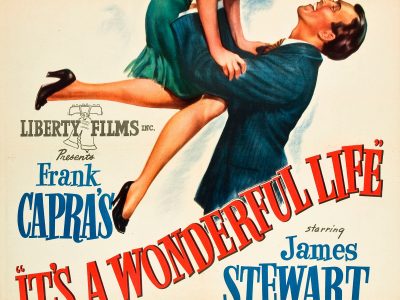
One of the Christmas classics is the Jimmy Stewart movie, It’s a Wonderful Life. George Bailey, Stewart’s character, is despondent about his life until he learns how much he has unknowingly helped others and how grateful they are. It’s heartwarming, if also a bit corny.
There’s a flip side to that story: the need to remember how much others have contributed to our own lives. That includes people we don’t know who have helped give us a better planet on which to live. Even the most rugged individualist and self-involved egoist benefits in this way from dedication and commitment of others. (Yes, even you, Elon Musk!)
I’ve come to think that the holiday season is the perfect time to remind ourselves of those gifts and their importance to our lives. I’ve tried to make this point each year in the holiday season, perhaps in the vain hope that it will become a tradition of sorts.
Most of us don’t often think of the benefits we receive free of charge: the air we breathe, the clean, unpolluted water we depend on, the climate we live in. We get those regardless of whether we pay taxes or how much or how little we consume. In short, from the view of any one individual, these are freebies, gifts from nature and society as a whole. If we lived in Delhi or Lahore, we’d realize what a gift it is to have breathable air. And for billions around the world, the gift of clean, unpolluted water is only a dream.
The downside of our ability to enjoy these benefits without personally paying for them, as economists have long realized, is that individuals have no direct incentive to pay the costs of achieving clean air or sustainable fisheries or a livable climate. These are what economists call public goods. They are also subject to the tragedy of the commons: the inevitable temptation to overuse resources that you don’t have to pay for. Of course, while these public goods are free to us, they aren’t free to society as a whole, which is why we need government intervention to keep our environment clean.
In other words, public goods are free to each of us, but they require the combined efforts of all of us. When we support these efforts, we reaffirm our membership in a community that begins at home but extends much further in both space and time. Ultimately, that community encompasses people around the world and generations yet to come — just as we have received public goods at the expense of others past and present.
There are a lot of influential Ayn Rand fans these days in D.C. and elsewhere who don’t get any of this. Why would you place the welfare of others over your own? And why would you want a sense of community with the inferior people who lack your towering abilities? It’s no wonder that the Peter Thiels and Elon Musks want to dismantle the government apparatus that protects the environment and public health.
I’m sure all Jimmy Stewart could have made all this sound more compelling. Maybe someday there’ll be a remake, in which an anti-environmentalist — maybe carrying around a copy of Atlas Shrugged or another Rand book) — who gets a chance to try out a world where there are no legal protections for air or water quality, nature, or the climate. But that sounds like a remake of Dickens’s Christmas Carol rather than Wonderful Life. Russell Vought would be perfect for Ebeneezer Scroodge.
In any event, I think, we can all take a moment, before unwrapping presents, to think of the public goods that we receive every day.
Happy Holidays!