The U.S. Has Now Become a Rogue Nation
Legal Planet: Environmental Law and Policy 2026-01-08
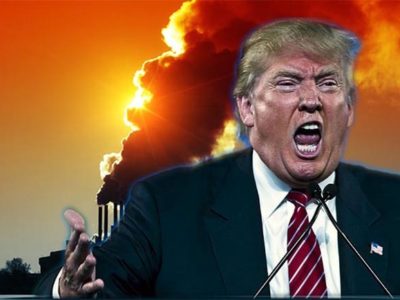
In the past few days, Trump has snatched the head of state of Venezuela, vowed to seize its oil, threatened to invade Greenland, and withdrawn from a 1992 climate treaty negotiated by George H.W. Bush. The treaty, the U.N. Framework Convention on Climate Change (UNFCCC), has been the basis for international climate cooperation for the past thirty years, including the Paris Agreement. In addition, Trump is withdrawing from the Intergovernmental Panel on Climate Change (IPCC), which will make it harder for American scientists to contribute to the periodic reports on the state of climate science.
Trump obviously wasn’t going to engage in any climate negotiations anyway, so the big question is how the UNFCCC withdrawal will impact his successor. Although it is unclear whether the President has the power to unilaterally renounce a treaty confirmed by the Senate, the UNFCCC itself provides for withdrawal with a one-year notice. The President can probably exercise that power on behalf to the United States.
On the face of things, withdrawing from the UNFCCC would seem to make it impossible to rejoin the Paris Agreement without somehow getting back into the UNFCCC. That might or might not be true. The Paris Agreement is a voluntary agreement that, except for some procedural provisions, is not legally binding. So, there’s no barrier in terms of U.S. law to prevent a future President from rejoining the Paris Agreement. Given that the Paris Agreement was formed under the UNFCCC, there could be a technical problem with allowing the US to rejoin the Paris Agreement, but I’ll bet the other members could get around that if they wanted to. Unanimous consent makes a lot of things possible. In addition, even entities that are not part of the Agreement itself, like the state of California, have played a role at the annual meetings of the parties. One way or another, I think the U.S. could regain the substance if not the formality of participation in the Paris Agreement.
If Trump’s action may not be successful in blocking international cooperation by future Presidents, it does send a message to the world. That message is amplified by the U.S. withdrawal from a host of other engagements, The list includes the Global Antiterrorism Forum, the Global Forum on Cyber Expertise, the UN International Law Commission, the International Cotton Advisory Committee, several U.N. economic commissions, the UN Democracy Fund, a dozen or so environmental and energy groups, Regional Cooperation Agreement on Combatting Piracy and Armed Robbery against Ships in Asia, and many more. Not surprisingly, the list also includes the International Institute for Justice and the Rule of Law, since the rule of law is an idea that the Administration disdains.
In other words, Trump’s actions are basically a big middle finger toward the rest of the world. If anyone wins from this, it’s China, which can now claim to be the responsible adult in the room.