Does the Unitary Executive Theory Exist? Not really.
Legal Planet: Environmental Law and Policy 2026-01-30

At Legal Planet, we often bemoan and gnash our teeth at the Unitary Executive Theory, which supposedly holds that because “the Executive Power shall be vested in the President of the United States,” Congress can not circumscribe the President’s removal authority or even his ability to manage federal agencies in any way.
But last week, the Court demonstrated that we have all gotten this wrong: when it comes to the Unitary Executive Theory, we have made a category error because No Such Theory exists.
Trump v Cook, argued last week, considers whether the President can fire a member of the Federal Reserve Board for “cause” if she has been indicted. You can see the problem here. The President wants to have full control over the Federal Reserve. He tells his Attorney General to indict boardmembers. Then he turns around and says, “she’s been indicted! She must go!” And that in fact is exactly what happened here. Cook supposed crime – declaring on a real estate form that she lived in a place that she didn’t – is not only untrue but something that Trump did himself. It’s a laughably weak case.
Brett Kavanaugh, not given pushing back on his Dear Leader, pushed back hard on the administration, stating from the bench that adopting this theory “would weaken, if not shatter, the independence of the Federal Reserve.” This line got picked up in lots of major media outlets, which was no doubt Kavanaugh’s intention.
But here’s the thing: if you believe the Unitary Executive Theory, such a consideration is literally irrelevant. The Executive Power is vested in the President of the United States; the President appoints Officers of the United States; Federal Reserve Board members are unquestionably Officers of the United States; so the President can fire them. The end. Don’t like it? Think it will create instability? Fine: amend the Constitution.
If this whole chain of reasoning seems ridiculous to you, you are right. The idea that the Constitution mandates financial instability beggars belief. But there you are.
Unless, of course, you are part of the Conservative Legal Movement, in which case you 1) must defend the Unitary Executive Theory because (as I have argued) it is a government-smasher; but 2) you need to maintain the confidence of billionaires, who along with bigots form the core of the Republican base. How can you destroy the government while not destroying those parts of the government that help you make your fortune?
Unsurprisingly, in Trump’s brief, the Solicitor General doesn’t even bother to figure out this problem, because it wants absolutely removal power, America’s economy be damned. That leaves it up to amici, and they fare littler better. In his amicus brief, former Texas Solicitor General and Professor Aaron Nielson of the University of Texas valiantly tries to make it make sense. What results is a dog’s breakfast Here are nut grafs:
As the First and Second Banks confirm, Congress can place monetary policy outside of ordinary political control, at least so long as a bank is not owned entirely by the government. The Fed, by design, has extensive private involvement. By contrast (and suffice it to say), agencies like the FTC have no private shareholders. Nor do other agencies’ independence have the same “basis in history.”…[T]he early nation respected removal with respect to financial regulation. In fact, in 1864, Congress repealed a removal protection (that had only existed for a year) for the Comptroller of the Currency, with one Senator observing it was “well-settled law that under the Constitution of the United States the President has the absolute power of appointment and the equally absolute power of removal,” and Congress should “leave the responsibility of removal to the President himself.”….Yet the First and Second Banks existed for decades, even though—if Article II applied—the constitutional violation would have been obvious. Monetary policy thus can be different in kind from other things agencies do.
One is tempted to recall what Muhammad Ali said in Kinshasa to George Foreman: “Is that all you got, George? Is that it?” Even under the page constraints of an amicus brief, this is pretty weak tea.
Let us first note the dripping — if not water-logged — irony of a supposed textualist interpreting the Constitution based upon not just legislative history, but the statement of a single Senator – in this case Jacob Howard – who voted to convict Andrew Johnson for violating the Tenure of Office Act, which rejected absolute Presidential removal authority.

Second, the brief highlights the fact that Congress repealed a removal protection. In other words, it repealed what it plainly thought was a constitutional provision in the first place.
Third, the concept that because some Federal regional banks have private shareholders it is not a public agency is simply laughable. Unlike the First and Second Banks, the members of the Federal Reserve Board are appointed by the President and subject to advice and consent.
The gravamen of all of this is that somehow “monetary policy” exists outside “executive power,” which might be the craziest thing of all. Traditional “executive power” held by the British Crown included the power to coin money. In any event, the idea of the Federal Reserve is that Congress delegated monetary policy to an executive branch agency – same as it has done in other circumstances.
And remember: this is the best attempt at this.
—
And none of it will matter. The Supremes will, I think, uphold the independence of the Federal Reserve because they want to.
The New York Times asks Has The Supreme Court Backed Itself Into A Corner? And the answer is no, because it rests upon an assumption that is demonstrably false, viz., that doctrine, consistency, and reasoning matter one whit. If it doesn’t like what a doctrine implies, it will simply ignore the doctrine, or come up with some sort of garbage excuse that fools no one. It doesn’t care. With this Court, there are no corners to back into because it will simply blow up the house.
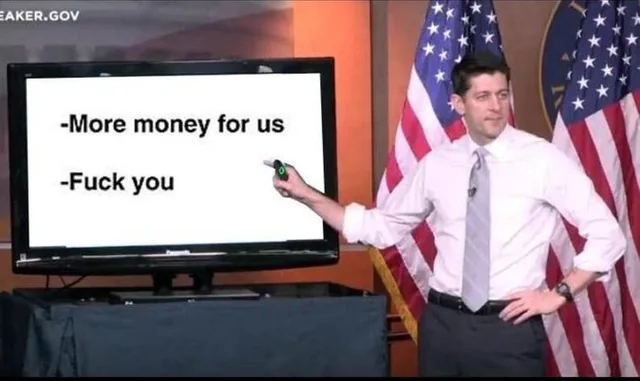
So what’s the point here? The point is simply this: Stop Granting the Conservative Movement Any Intellectual Legitimacy. It has no theories, only “theories.” It wants to smash the government, so it invents a series of “theories” – the Unitary Executive Theory, the Major Questions Doctrine, heightened Standing requirements, the “Equal Dignity of the States,” Textualism, Originalism, the whole shebang– to justify its policy positions, and then throws them out when they are inconvenient.
It is the judicial equivalent of what has become known as Wilhoit’s Law:
Conservatism consists of exactly one proposition, to wit: There must be in-groups whom the law protects but does not bind, alongside out-groups whom the law binds but does not protect.
Actual, real conservatism means a lot more than that. But when it comes to what Americans have known as “conservatism” for pretty much my entire lifetime, Wilhoit’s Law is correct. There is no such thing in modern America as “Conservative Jurisprudence” or “Conservative Legal Philosophy.” It’s just: we win, you lose, f*ck you. That doesn’t solve the problem, but it at least might stop the gaslighting, and remind us of the crucial fact: the Emperor Has No Clothes.