Think No One Writes Climate Songs? Here are 400
Legal Planet: Environmental Law and Policy 2026-06-18


You might assume most musicians are silent on climate change and the environment. But you’d be wrong.
This Earth Day, I started a Climate Playlist because frankly I didn’t see many comprehensive ones out there. My first attempt was three dozen songs. But I got additions from readers, friends and colleagues and then I went down the rabbit hole of Reddit threads to find more. I’ve kept adding tracks here and there. My Climate Playlist is now more than 400 songs totaling 30 hours of music. I’m as shocked as anyone.
This Climate Playlist spans from the 1960s to new releases out this month. In fact, a huge number of these tracks are from the last 5 years. There’s bubble-gum pop, jazz, indie rock, punk, funk, electronic, alternative R&B, acoustic singer-songwriters, country, freak folk, post-punk, instrumental world music, surf rock, traditional Māori music, movie soundtracks — you name it.
I wanna highlight a few trends, hidden gems, and standouts.
Some classic climate anthems have been forgotten.
There’s a lot of online Earth Day music lists and they pretty much all include Joni Mitchell’s “Big Yellow Taxi” and Marvin Gaye’s “Mercy Mercy Me,” but there are dozens of songs from past generations that seem to have fallen out of memory. First and foremost, the Turtle’s “Earth Anthem” (1968) which was reportedly recorded at 3am by candlelight to achieve the proper mood. I’d also include in this category songs like “Shape of Things” by the Yardbirds (1964), “Hungry Planet” by the Byrds (1970), “Whose Garden Was This” by Tom Paxton (1970), “Don’t Go Near the Water” by the Beach Boys (1971), and “Earth, Wind & Fire” by Earth, Wind & Fire (1976). Another classic environmental anthem is “Nature’s Way” by Spirit from 1968 (whose verse goes: “It’s nature’s way of telling you something’s wrong / It’s nature’s way telling you in a song”). The tune shows up twice on the playlist thanks to a 1991 cover by This Mortal Coil. In fact, cover versions of some of these songs have helped them live on. These include “Maggot Brain,” “After the Gold Rush,” This Land is Your Land,” etc.)
Radiohead may be our most important contemporary climate songwriters.
Frontman Thom Yorke appears on the playlist 8 times via the band as well as side projects like The Smile, Atoms for Peace, and his solo records. He’s adept at conveying a message through instrumentation and lyrics without using the word “climate.” In “The Clock,” Yorke sings: “Time is running out for us, but you just move the hands upon the clock… You make believe that you are still in charge,” atop of twitchy, metronome-like beats. Meanwhile, Radiohead’s “Bloom” (“Open your mouth wide / the universal sigh / and while the ocean blooms / it’s what keeps me alive”) took on a whole new meaning when performed live at the Pathway to Paris show at Le Trianon during the COP21 climate conference. Radiohead guitarist Ed O’Brien appears separately three times on this list thanks to his own records, “Earth” and the brand new “Blue Morpho,” which is named after a species of butterfly from Brazil.
Environmental anxiety could be its own genre of pop music at this point.
The artist RAYE has a track titled “Environmental Anxiety” that mixes doomscrolling lyrics (“You poison the waterfalls / Set fire to our rivers of hope / The end of us all, well it was always bound to happen”) with the sound of beeps and boops from phone apps. CMAT’s “Mayday” has been described as a “very sexy song about climate change” that sprung from a real experience, in which the artist was texting anxiously with a boyfriend who was being evacuated from a forest fire in another country. Ah, modern love. Ellur’s “God Help Me Now” is a similarly anxious call for help from a 25-year-old. The Danish singer-songwriter Mirby has three songs on the playlist including one chorus that exemplifies the ubiquitous “Go touch grass” meme: “Just go outside now / smell a flower / breathe in the air / when it’s all too much now / Be in nature while it’s still there).” Even Charli xcx is represented here. Following up on her Brat Summer, she now sings glumly “Spring summer ’26, when the world is gonna end, no hope for it” on her newest single. And remember when the sky turned orange in California a few years ago thanks to west coast wildfires during the Covid pandemic? Pinegrove’s “Orange” is an indie pop song about that anxious moment in time.
Professional musicians with a background in environmental justice or environmental science are powerful communicators.
The artist Xiuhtezcatl is a longtime activist and also youth climate plaintiff in Juliana v. United States and other lawsuits. Xiuhtezcatl, whose recent music has been described as contemporary hip-hop intertwined with Indigenous flutes and rhythms, has 4 tracks on this playlist, and that’s not even all of the climate-related songs in their catalog. The Maine band GoldenOak centers around the lyrics of Zak Kendall, who studied ecology in college and served as executive director of Maine Youth for Climate Justice. His band has 6 songs on this list and hosts a 2-day music festival for music rooted in nature. From Canada, Jayda G is a house music producer who studied biology, worked at a Vancouver aquarium, and got a master’s degree in Resource and Environmental Management, specializing in environmental toxicology before making it big by remixing Dua Lipa. One song on this list combines her passions — “Orca’s Reprise” revolves around the sounds of whales.
Brits and Australians are disproportionately represented on the Climate Playlist.
While UK musicians like Massive Attack, KT Tunstall, Brian Eno, Imogen Heap, Foals, and Jarvis Cocker are pioneers who show up on this list, you’ll also notice a disproportionate number of Aussie artists. Midnight Oil’s “Beds are Burning” is a classic. Nick Cave has several songs here. Rock band King Gizzard & the Lizard Wizard are absolutely prolific when it comes to explicit climate jams (songs like “Melting,” “Planet B,” “Plastic Boogie,” “Greenhouse Heat Death,” etc.). More recently, Genesis Owusu, a Ghanaian-Australian rapper and songwriter has 3 songs on the playlist all from his brand-new album “Redstar Wu & the Worldwide Scourge.” The piano-playing Australian songwriter Missy Higgins may win for most direct appeal to oil companies with her lyrics in “How Was I to Know” (“When the order came to dig the well, to crack the earth to pull the oil, to take the blood out from my mother’s veins…”) Rocker Courtney Barnett appears here, writing about dead seals and oil spills. Lesser-known psyche rock band Pond from Perth sing “I might go shack up in Tazmania, before the ozone goes and Paradise burns in Australia.” I think it’s fair to assume that places already experiencing the most dramatic, extreme weather events are inspiring the most climate songs because it’s becoming an inescapable part of everyday life.
Playing with perspective helps songs avoid being preachy.
Al Matcott’s “Summer’s Coming” (also Australian) is a gnarly tune written from the perspective of Mother Earth: “She said now that summer’s coming, I could care less about all you motherfuckers you deserve what you get.” It’s a literary device that gets used by Grimes, and others on the list. The New Pornographers open their new album with the line “It’s quite a view from my deck chair / Sailor on this ship of doom” and continue to tell the album’s story through the eyes of a captain facing rising seas. ANOHNI’s “4 Degrees” uses deadpan sarcasm to condemn humans: “It’s only 4 degrees, I wanna see this world, I wanna see it boil.” Many more of these songs, like “Hello Earth” by Kate Bush and “Mother Earth” by Neil Young, are love letters to our planet. There’s also a whole genre of songs that are not actually about climate change at all but nevertheless include significant nods as part of the storytelling. Brandon Flowers, frontman for The Killers, has a love song called “Still Want You,” in which he croons “Climate change and debt, I still want you / Nuclear distress, I still want you / the Earth is heating up / I still want you / Hurricanes and floods, I still want you.” Many are love songs: Hozier’s “Like Real People Do,” James Blake’s “Trying Times,” Kevin Morby’s “Badlands,” Lana Del Rey’s “The greatest,” Annika Bennett’s “A Tree Falls,” and Kacey Musgrave’s “Oh What a World” The list goes on. Perhaps the best climate anthems are love songs.

Why is all this important? While much of my writing focuses on climate journalism, more people stream music than follow the news or read science journals. Music is a time-tested vehicle for change. Social science journals and papers on ethnomusicology often draw the connection between cultural expressions and identity. At a time when some politicians are going silent on climate change, many singers are not and they may have more influence, and a more attentive audience, anyway. We need climate anthems more than ever before, but the truth is we have so many great ones already.
Welcome to The Drain, a weekly roundup of environmental and climate news. Programming note: After writing this weekly roundup for more than a year, I’m going to be taking a summer break for a few weeks. In my absence, please enjoy these 400+ songs for your vacation, road trip, or while reading the news (it’s on Spotify and Apple Music). And please do continue sending me tracks I may have missed or overlooked. Keep in mind, there is a whole other genre of climate pop songs for kids. To be honest, I didn’t want to listen to them myself, so I’ve started a kid-specific list here. Enjoy your summer! I’ll be back in August.
The Media
POLITICO hosted an energy summit with newsmakers including EPA Administrator Lee Zeldin. POLITICO Host Dasha Burns interviewed Zeldin, who talked about his approach to governing: “We have a federal statute. I follow, pursuant to Loper Bright, the best reading of that statute. I don’t try to give myself more expansive creative powers than what statute says.”
As I wrote last week, POLITICO announced it is retiring E&E News, and that E&E’s policy reporting expertise will be redirected and rebranded inside POLITICO newsletters. Longtime E&E Editor Cyril Zaneski meanwhile says he’s moved on and is “looking for another mountain to climb.”
In other media moves, I have a new story up right now about NPR laying off longtime energy correspondent Jeff Brady as part of that recent downsizing. But I also spend time highlighting the 33+ climate reporters at local public radio stations who are doing the Lord’s work as part of NPP’s climate collaborative.
Along those lines, Grist and KERA, public radio in Dallas-Fort Worth, have teamed up to jointly fund a reporting position focused on climate, energy and the environment in West and North Texas. They’re seeking applications.
Grist also announced it has hired Sachi Kitajima Mulkey as a reporter covering the intersection of climate change, policy, politics, and culture. Based in New York, she returns to Grist from a fellowship at The New York Times covering climate change. Mulkey previously worked as a news fellow at Grist in 2024.
Steven Rodas joined Inside Climate News to cover water, wildfires and agriculture throughout California. Based in Los Angeles, he previously reported on the environment in New Jersey, covering energy, pollution, wildlife and development. Steven’s work has appeared in the San Francisco Chronicle, NJ.com/The Star Ledger and Grist. Rodas shared the news on Bluesky.
That follows Blanca Begert’s departure from Inside Climate News to join the Los Angeles Times.
Meanwhile, news creators not based in traditional newsrooms continue to compete for eyes and ears. Climate organizations and climate-focused newsrooms should “partner with like-minded news creators, lending legitimacy to both parties,” opines Isa Lim at Dialogue Earth.
A public radio podcast called “The Big Dig” is returning / expanding with what the hosts call a “Highway Teardown Tour” of eleven cities around the country: Seattle, Portland, Austin, Louisville, Baltimore, Philadelphia, Rochester, Syracuse, Providence, Boston, and New York City.
Super(bad) El Niño
Meteorologists made it official last week, saying that an El Niño has formed in the tropical Pacific and will likely intensify in the coming months, setting off more extreme weather and higher temperatures around the world.
NOAA said there is a 63 percent chance of the sea-surface temperatures climbing 2 degrees Celsius above the norm, making for a “very strong” event, the New York Times reports. UN Secretary-General António Guterres described El Nino as an “urgent climate warning, saying that “El Nino conditions will pour fuel on the fire of a warming world.”
Since NOAA canceled its regular briefings, the non-profit Climate Central is providing public monthly climate updates. Atmospheric scientist Zack Labe opened this month’s briefing by saying that atmospheric carbon dioxide concentrations hit a record high in May and that the monthly average global temperature this summer could rise as much as 3.5 degrees Fahrenheit (1.9 degrees Celsius) above the pre-industrial benchmark. Inside Climate News has a write-up.
Amid spiking temps, a new study led by the Wildlife Conservation Society used artificial intelligence to detect sheltered pockets in the ocean where cool currents, reduced exposure to sunlight and locations outside cyclone paths mean coral reefs are more likely to survive.
Speaking of AI and weather, in 2019, Amy McGovern and her collaborators were awarded a $20 million grant from the National Science Foundation to start an AI institute dedicated to weather forecasting. That funding supported 24 faculty members, 35 researchers, 46 graduate students and 83 undergraduates. Then the U.S. Office of Management and Budget killed the funding. McGovern spoke with the NYT.
Energy
There’s a deal to end the war on Iran after 107 days, if it can hold. “Ships of the World, start your engines,” Trump wrote. “Let the oil flow!” Yesterday, he signed an MOU with Iran. Under the developing deal, the Strait of Hormuz will reopen and the U.S. will lift sanctions on Iran, letting flow billions of dollars.
Analysis from the Budget Lab at Yale University shows that lifting the federal gas tax would give Americans back about $37 of the $250 in higher gasoline costs paid over the course of three months.
Trump’s Department of Justice is giving up on defending the president’s wind permitting moratorium which was a Day One executive order, Heatmap’s Emily Pontecorvo reports. The DOJ quietly filed a motion last week to dismiss its appeal of a federal court’s December decision vacating the order to halt wind energy approvals.
Wind and solar developers in the U.S. have just a few more weeks to secure lucrative federal tax incentives by a Fourth of July deadline, Jeff St. John reports for Canary Media. “But now the clock will start ticking on a second deadline for these projects: Under the current law, they must plug into the grid within four calendar years of securing safe-harbor status or else they’ll lose the tax credits.”
Plug-in balcony solar kits have “the potential to change how Americans understand and consume energy,” Robinson Meyer writes for New York Times Opinion. Already 30 states have passed bills allowing these kits or are considering such legislation. “More states should get on board with them as part of a broader campaign to transform how our country harnesses renewable and zero-carbon power.”
Lee Raymond, former ExxonMobil chief executive who was also one of the country’s most influential climate science deniers, died this month. There were obits, essays and “good riddances.”
California
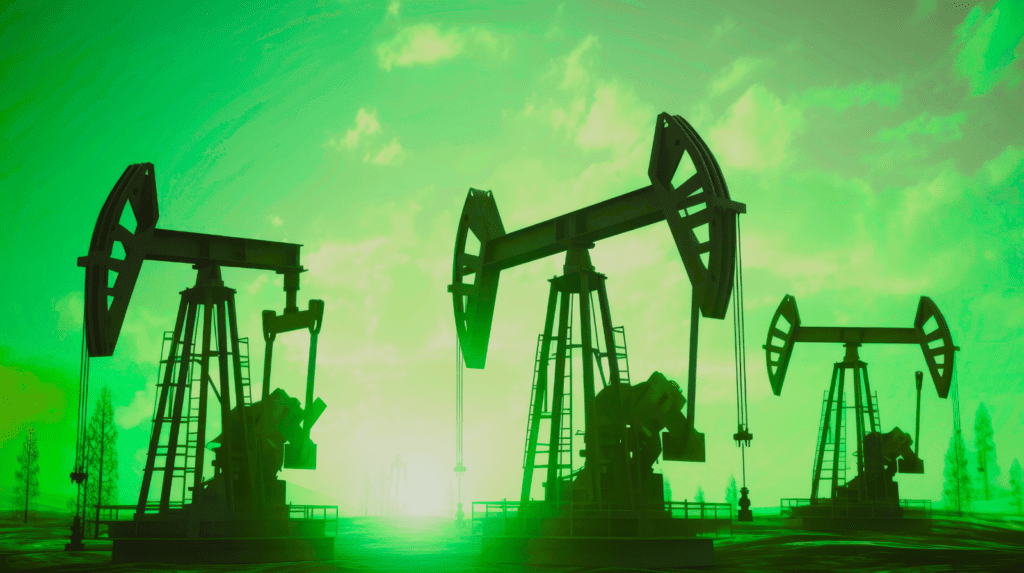
The only thing more hated than an oil field is a data center, so why not combine them! Jake Bittle at Grist has a story today from California’s Central Valley about a new project that seeks to do just that. California Resources Corporation, the state’s largest oil driller, just unveiled plans to build a 600,000-square-foot data center campus in the Elk Hills oil field about two hours north of Los Angeles. “It hopes to avoid the nationwide backlash from communities,” and it’s part of a growing trend in the AI boom, Bittle writes.
The Trump administration plans to pay off yet another energy developer — this time $765 million to Invenergy — to abandon four offshore wind leases, including one off Morro Bay, and redirect investments to natural gas and geothermal, Hayley Smith reports for the LA Times. If you’re counting, that’s $2.5 billion of taxpayer money to kill offshore wind leases.
Senate Democrats in Sacramento want to slow the brakes on the recent carbon market rules that CARB passed (endorsed by Gov. Newsom). They worry that the new cap-and-invest rules will drastically shrink the state’s funding for climate projects and argue that it threatens the spending deal they struck with Newsom last year. CalMatters reports that the Senate opposition threatens to hold up many of Newsom’s priorities.
Clean water advocates are urging Newsom and the Legislature to restore funding, saying otherwise it will stall progress for communities with contaminated drinking water, LAT’s Ian James reports.
Sammy Roth has an exclusive story on California water politics at Climate-Colored Goggles. “I’m talking about this month’s elections for the Imperial Irrigation District — and a last-minute infusion of mysterious dark money.” He follows tens of thousands of dollars flowing through shadowy companies based elsewhere “to elect some of the most consequential people in Western water.”
Oil refiners in the state reported gross profits margins of $1.24 per gallon in April based on new data released by the California Energy Commission. Consumer Watchdog says that by contrast, oil refiners’ margins were 49 cents per gallon in January.
Solar power is surpassing natural gas generation in California. Utility-scale solar generation in the state exceeded power from gas during 82% of the days this year through May, according to a Tuesday report from the US Energy Information Association. Emily Forgash at Bloomberg writes that “while solar has supplied more power to the state’s grid for short periods in the past, this marks the first year when average generation in the first five months has outpaced the fossil fuel that’s the biggest source of US electricity.”
Los Angeles
Climate activists plan to stage protests against Big Oil sponsorships in sports on Sunday, June 21. Protestors are scheduled at SoFi Stadium—against FIFA World Cup’s sponsorship deal with Saudi Aramco—and at Dodger Stadium, against Dodger owners’ sponsorship deal with Phillips 66. They will be joined by activists in 7 other U.S. and Canadian cities at FIFA World Cup stadiums and arenas home to pro baseball, soccer and basketball teams that advertise for fossil fuels. It builds on Dodger Fans Against Fossil Fuels, which has amassed nearly 30,000 signatures on a petition urging Dodger owner Mark Walter to end the team’s Phillips 66 sponsorship.
Last month, the LA Times put together a list of the 15 best beaches in L.A. County, and now they have a reader-generated list of the best summer beach getaways in the state. (I concur with Cayucos.) You can compare the best of lists with the dirtiest list thanks to Heal the Bay’s beach report card.
One NorCal beach pier is ground zero for the climate battle over what to save from rising seas: Bay Area leaders are demanding tens of millions in state and federal funds to rebuild Pacifica’s crumbling city pier and protect eroding bluffs, Suzanne Rust reports.
The Wilshire subway took 46 years to complete. “Future projects should skip the decades of objections,” writes Payton Rockwood for LA Times Opinion.
As one of 19 L.A. city parks hosting free World Cup watch parties (Kick It in the Park), Echo Park Lake has become a World Cup hot spot, Alissa Walker writes at Torched. Good timing for city officials to vote on a measure having to do with funding city parks for the era of megaevents. It looked like a longshot but in the end, the council voted to double the charter allocation, which Walker calls a win of sorts for advocates.
The Pasadena Unified School District wants to remove nearly 200 trees from campuses and the plan has angered local residents, Erin Stone reports for LAist. “School district officials say 193 trees across 11 campuses need to be removed to clean up soil contaminated by the Eaton Fire.” But there are other ways to remediate the soil without taking down so many much-needed trees.
Despite the recent federal support for a coal terminal in Oakland, the project’s backers still have a long road ahead, Naveena Sadasivam reports for Grist.
Trump Administration
I’ve previously written about the race to “beautify” the nation’s capital, especially its fountains and water features, using park entrance fees. Now the race is on to de-greenify the Reflecting Pool, as National Park Service workers were seen dumping bottles of hydrogen peroxide into the pool Tuesday morning. Social media noted that the resulting green rectangle with a blue border resembles a Mark Rothko painting.
The U.S. EPA on Friday submitted four more California air pollution rule waivers to Congress, where Republicans can use the Congressional Review Act to nullify them. This is wonky but important.
POLITICO’s Alex Guillén reports that in this new batch “three of the waivers cover older greenhouse gas rules for light-duty cars and trucks, including the first greenhouse gas waiver issued to California in 2009 and a subsequent 2013 waiver for what was known as the Advanced Clean Cars rule that covered through model year 2025. The third waiver was the Biden administration’s reinstatement of the ACC rule after it was revoked via rulemaking by the first Trump administration… The fourth waiver EPA sent to Congress on Friday requires new off-highway engines below 25 horsepower — a category including lawn mowers, weed whackers, hedge trimmers, chain saws and gasoline-powered golf carts — to transition to zero-emission options to curb emissions of smog-forming pollutants.”
Trump’s DOJ intervened in that lawsuit over xAI’s gas turbines siding with Elon Musk’s company that attempts to stop xAI from running the natural gas turbines “threatens American national, economic, and energy security…” As Molly Taft reports for WIRED, emails obtained in the litigation show there were 57 turbines operating without permits at the Colossus 2 site.
The Department of Energy has reversed its terminations of $82.1 million via 11 grants to clean energy projects in states that went for Kamala Harris in 2024, after a federal judge vacated the cancellations last Thursday.
Trump last week opened up previously protected areas of the Pacific Ocean to commercial fishing. Trump signed a proclamation opening up commercial fishing at three marine national monuments, Rachel Frazin reports at The Hill.
A federal judge this month temporarily blocked the National Park Service from removing or altering signs and other materials at national parks across the country to comply with a Trump directive to whitewash American history by dismantling plaques about slavery and the like.