"Between you and I"
Language Log 2025-10-05
Politics aside, there's been some prescriptivist reaction to (part of) a Signal exchange among White House aides Anthony Salisbury and Patrick Weaver about the idea of deploying the 82nd Airborne to Portland. From The Guardian :
“Between you and I, I think Pete just wants the top cover from the boss if anything goes sideways with the troops there,” Weaver said.
For some people, it should be "between you and me", and "between you and I" is annoyingly wrong. I've gotten a couple of emails about this. So here's the (complicated) story.
In the first place, elite writers have been using similar forms for centuries. Wikipedia starts with these:
"Between you and I" occurs in act 3, scene 2, of The Merchant of Venice, in a letter written in prose by Antonio, the titular character, to his friend Bassanio: "Sweet Bassanio, … all debts are cleared between you and I if I might but see you at my death."
Writer and critic Henry Hitchings points to usage in William Congreve's The Double Dealer (1693) and in Mark Twain's letters. Otto Jespersen found similar examples ("pronouns or nouns plus I after a preposition", in Robert J. Menner's words) in Ben Jonson, John Bunyan, Charles Dickens, and Graham Greene, and Menner adds Noah Webster, Samuel Pepys, Thomas Middleton, and others. Writer Constance Hale notes that Ernest Hemingway frequently used pronouns this way: "Gertrude Stein and me are just like brothers."
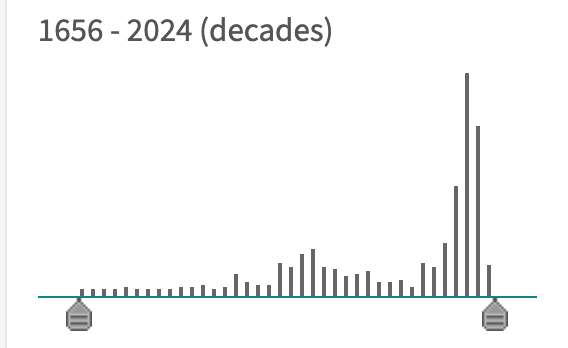
In face, the evidence from Literature Online (LION) is that "between you and I" was the dominant form until late in the 19th century — and has been recently resurging:
"between you and I" "between you and me"2331162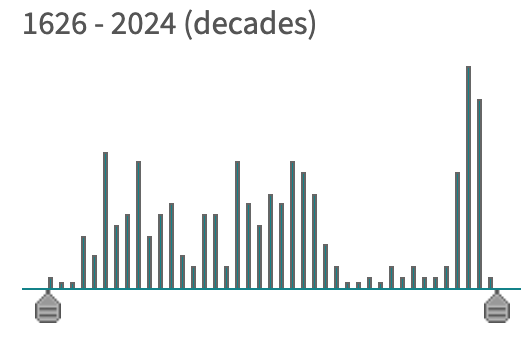
Merriam-Webster's Concise Dictionary of English Usage offers three theories, followed by many examples:
Of all the theories advanced to explain the existence of between you and I, the most popular one (invoked as recently as Arnis 1998) is that the phrase is the result of children being taught to avoid me in “it is me,” with the result that I is substituted for me in places where it should not be. The technical term for avoiding one grammatical trap only to fall in another is hypercorrection. Barnard 1979 will not accept hypercorrection as the cause, however:
But in the Stratford Grammar School where Shakespeare was a pupil, it had not occurred to anybody that English grammar needed to be taught—only Latin. Yet the Bard has one of his heroes, Antonio in The Merchant of Venice, tell his friend Bassanio: “all debts are cleared between you and I.” And this is not in light conversation, but in a letter written in the face of death.
A different explanation is offered by Henry Sweet, in his New English Grammar (1892). Sweet suggests that the early modern English between you and I resulted from you and I being so frequently joined together as subject of a sentence that the words formed a sort of group compound with an invariable last element. The invariable last element is also mentioned by Anthony Burgess (in a book review collected in Homage to Qwert Yuiop, 1986), who notes that in some West Country dialects of England I is the invariable first person pronoun.
Another possible explanation (unnoticed by the comentaros) comes from the linguist Noam Chomsky. In his Barriers, 1986, he says that compound phrases like you and I are barriers to the assignment of grammatical case. This means that between can assign case only to the whole phrase and not to the individual words that make it up. Thus the individual pronouns are free to be nominative or objective or even reflexives. Chomsky's theory would also explain some other irregularities in pronoun use (See PRONOUNS); it's the best that has been offered so far.
I'm somewhat skeptical of the barriers theory, for reasons to be discussed another time.
But anyhow, no one should be shuddering for grammatical reasons about the Salisbury/Weaver exchange.