Can't even
Language Log 2025-11-13
In the comments on "Cant-idates" (11/12/2025), there was some back-and-forth about how much phonetic residue Americans generally leave of the word-final /t/ in sequences where can't is immediately followed by a vowel-initial word.
In defense of the answer "not much", I pulled three examples of "can't even" (literally) at random from the NPR podcast corpus I've used in previous posts (and in teaching corpus phonetics).
Your browser does not support the audio element.
David Brooks: uh basically, you have uh uh regulators who are asked to reorganize 17 percent of the economy and they can't even do ((it)) a website right
Zeroing in:
Your browser does not support the audio element.

Your browser does not support the audio element.
Deborah Blum: I- I mean I can't even figure out where they came up with it.
Zeroing in:
Your browser does not support the audio element.
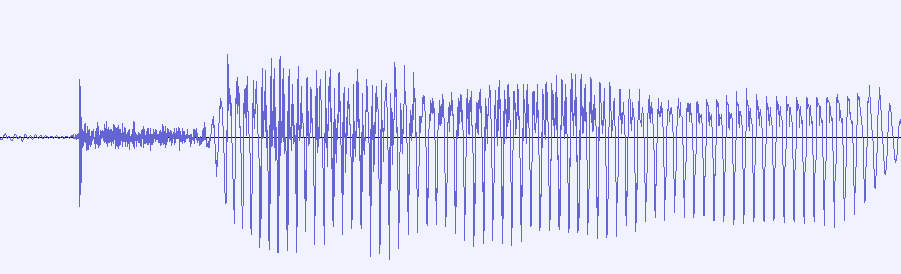
Your browser does not support the audio element.
John Rother: Each year, the threatened reduction is so unmanageable that we can't even figure out how to pay for it.
Zeroing in:
Your browser does not support the audio element.

Quod erat demonstrandum.
I doubt that the /t/ has been fully deleted in these examples, but its realization has been (variously) lenited to the point where the distinction between presence and absence is at best stochastic.
This doesn't mean that the distinction between can and can't is entirely lost, since in a similar context, the vowel of can would generally be reduced.