How long have queer folk been fighting Nazis?
Pharyngula 2021-07-07
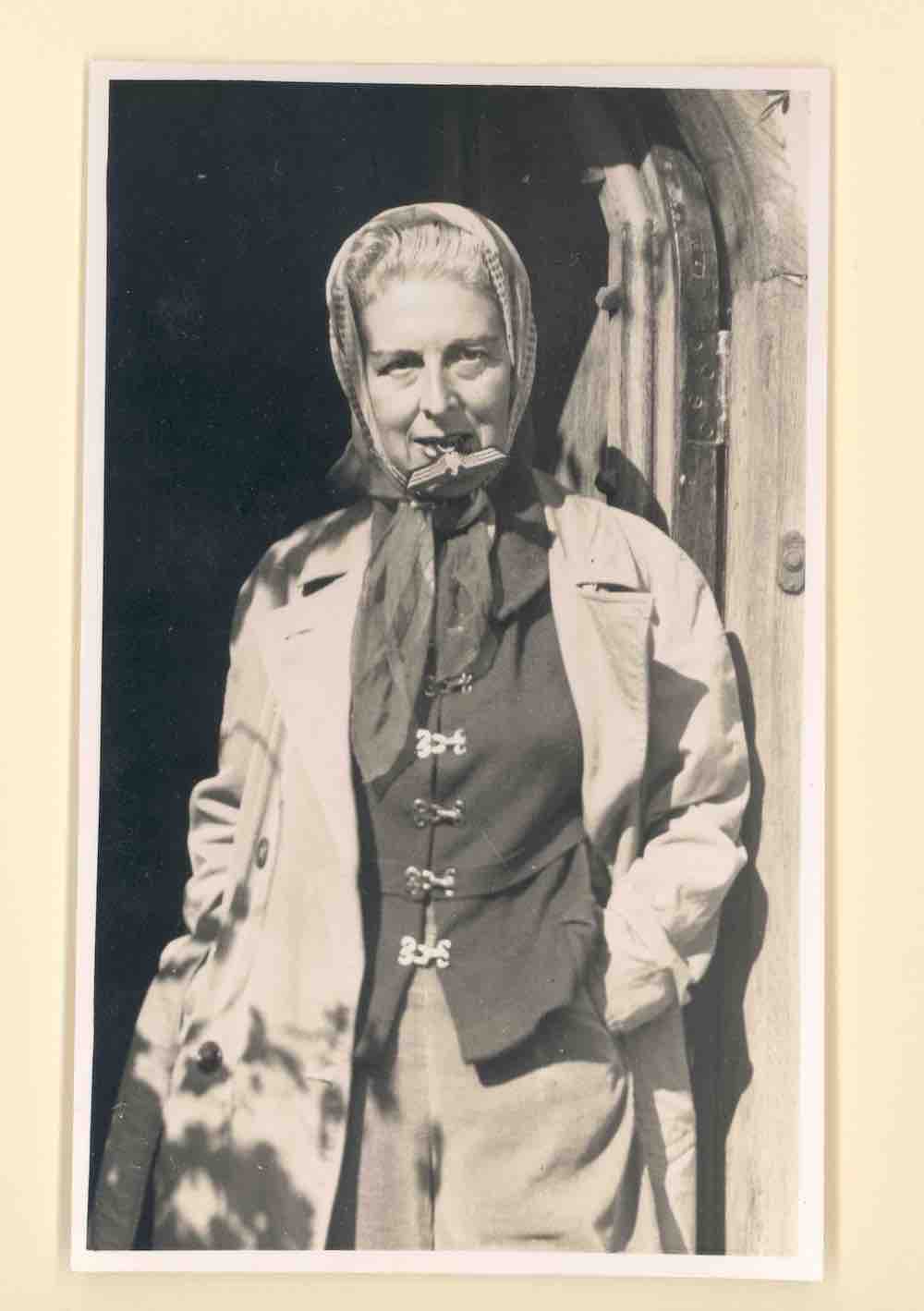
As long as there have been Nazis. It’s a natural enmity. Today I learned about Claude Cahun and Marcel Moore, two non-binary people who battled the Germans in occupied Jersey.
Lucy Schwob is better known by their pseudonym, Claude Cahun, and Suzanne Malherbe by her pseudonym, Marcel Moore. Theirs was a creative partnership, as well as romantic. Cahun was a French surrealist photographer, writer, and sculptor, while Moore was an illustrator and designer.
Cahun is the more renowned of the pair. She used her work to challenge notions of identity and gender with androgynous self-portraits that bring to life an array of characters. In one, she’s a bodybuilder holding barbells and hearts drawn on their cheeks; in another, she’s a lady of the manor swathed in velvet. Her work is a playful clash of the masculine and feminine, but also a critique of the societal norms she spent her life refusing to adhere to.
Cahun believed that gender was transmutable. Assuming different identities was her forte, and she regularly performed in avant-garde theatre in 1920s Paris (experts still refer to her using feminine pronouns, but it is likely she would have identified as non-binary today). Moore would create the costumes that Cahun would wear to tread the boards. A forerunner of the modern artist, Cindy Sherman, she was ahead of her time in more ways than one.
They were also uncommonly brave.
Three years after her arrival, on June 30, 1940, the Germans invaded. The islanders knew early on that Jersey was likely to be occupied – 6,600 fled on evacuation ships – but Cahun and Moore chose to stay. “They’d spent their entire lives resisting authority, so this was an opportunity to be part of the resistance on the island,” says Downie.
Together, the pair created a two-person resistance campaign, with the main focus being what they called their “traps”. Cahun would draft notes addressed to the German troops, which Moore would translate into German, signing them ‘Der Soldat Ohne Namen’ (‘The Soldier Without a Name’).
Their aim was to inspire dissension amongst the troops by pointing out the idiocy of war. Professor Shaw says they would do it in a cryptic way, using poetry, reminiscent of the surrealist sensibility: “It wasn’t like propaganda telling you ‘Here’s what you need to do’, it spurred the soldiers to think their own thoughts about it.” They would catch the bus into St Helier, disguised as old ladies to deliver the messages, placing them on parked cars and inside cigarette packets. They kept as quiet as they could about their resistance – not even their housekeeper suspected them.
Subversive poetry is a perfectly legitimate means of resistance. It bothered the Nazis enough that when they were captured after four years of making nuisances of themselves, they were sentenced to death — they were only spared because the Allies were timely in their liberation of island ports and the French mainland.
Hooray for courageous weirdos!