Tibet water
What If? 2019-12-01
Ben Zimmer was just passing through Hong Kong Airport, where he got a bottle of Tibet 5100 spring water, complete with Tibetan script:


The Tibetan reads:
[Wylie:] Bod ljongs 'khyags rom gter chu
བོད་ལྗོངས་འཁྱགས་རོམ་གཏེར་ཆུ།
bod=Tibet ljong=land 'khyags rom= ice gter=treasure chu=water
"Water from the treasury of ice in the land of Tibet"
N.B.: So far as I know, since this is the only Tibetan on the bottle, it helps us understand that the exotic script is there simply as Tibetan-themed decoration, and that the labels are not genuinely bilingual. Sadly, although Tibetan, Mongolian, etc. are living languages read, written, and spoken by millions, they are often treated as exotic ornaments in materials where only the Chinese is actually meant to be read.
After buying the Tibet 5100 water, Ben had some misgivings when he read this:
"Tibet Spring Bottled Water: Status Symbol or Slippery Slope?", by China.new
Some recent economic developments regarding this pricey water make the story even murkier. The following notes come from Jichang Lulu, sent to me on November 5, 2019:
Tibet Water shares inexplicably dropped ~70% yesterday in HK:
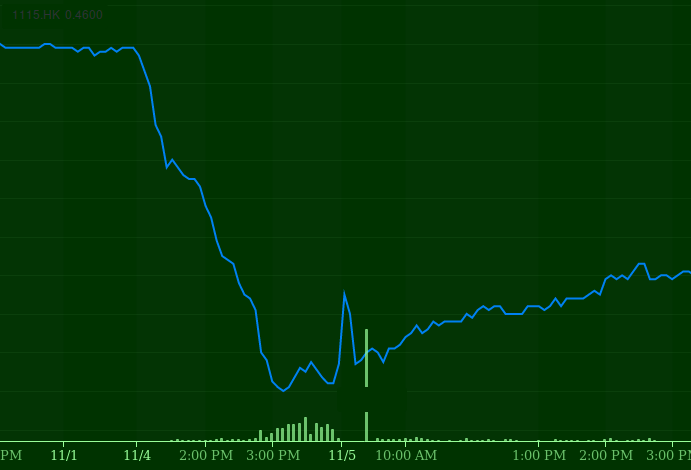
Twitter comment by Muddy Waters, the ironically (for this post) named investigative research firm headed by Carson Block, who is known for "documenting and alleging fraudulent accounting practices in publicly traded Chinese companies":
Feels like the end of an era with Tibet Water $1115.HK imploding yesterday on no news. Watched it for 6+ yrs, knowing it's a scam – a money laundromat 4 CN Ministry of Railways. Never went short b/c that'd be betting AGAINST corruption in China. Would love to know what happened
Comments mention disclosure of high-speed railway losses, but those were known to be largely unprofitable. Be what may, I was reminded of a more general issue.
Tibet Water is only one of the Chinese brands of bottled water that exploit the pristineness of Tibet. To those more aware of the relevant politics and history, these water bottles (often given away for free to high-speed train passengers) are in fact a reminder that the exploitation of Tibet's natural resources is largely done to serve the CCP's Leninist capitalism at the expense of the majority of the Tibetans. On this topic, Gabriel Lafitte's Rukor རུ་སྐོར་ project has documented several notorious cases of 'nature vs the Tibetans' hypocrisy, notably the 'Death by UNESCO' situation seen in Hoh Xil ᠬᠥᠬᠡ ᠰᠢᠯᠢ Хөхшил 可可西里 / Achen Ganggyap ཨ་ཆེན་གངས་རྒྱབ་in Amdo / Qinghai (see here and here).
Three years ago I had an exchange with the noted Tibetologist Dan Yerushalmi aka Dan Martin, who wrote an interesting blog post on another, relatively minor brand, whose name was translated as 'Tibetan Magic Water'.
"Magic Water?", Tibeto-Logic, 8 Sep '16
My own post on the matter "Kalendis Octobribus [i.e., 'on National Day / 国庆节']: Tibetan magic water" summarised his before looking into the history of the company and the relevant temple (which took me a while to geolocate).
At Tibeto-Logic, Dan Yerushalmi (aka Dan Martin) recalls being laughed at outside Drepung Monastery for drinking Xizang shenshui 西藏神水 mineral water. The bottle translates its brand as 'Tibet Magic Water' in English, but the hilarity ostensibly came from the Tibetan: བོད་ཀྱི་ལྷ་ཆུ་མཆོད་རྟེན་ཉི་མ། bod kyi lha chu mchod rten nyi ma. Dan relapsed into "the kind of a cowed smile you smile when you have no real clue what the laughter is all about".
The first half of the Tibetan name means the same as the Chinese brand, 'Tibetan divine water'. The second half, as Dan realised decades later, refers to Chorten Nyima, a holy site in Gampa Town (གམ་པ་གྲོང་རྡལ། gam pa grong rdal, 岗巴镇), Gampa County (གམ་པ་རྫོང། gam pa rdzong, 岗巴县), Shigatse Prefecture, whose water can wash away the worst sins, down to and including incest. That's the water Dan was drinking, which presumably explains the hilarity.
The relevant point is that the product's branding and the company's background clearly point to a non-Tibetan, primarily Han target customer base, to the extent that no one stopped to think at least some Tibetans would associate drinking such water with having heinous sins to atone for.
The poles are similarly marketed to Chinese consumers. It would be prolix to recapitulate here the story about the purportedly pH 8.88 water from Iceland sold by a peculiar Chinese businessman, so here's a link for those interested.
Oh, dear lord, may the holy waters wash away my sins!
Selected readings
- "Tangut beer" (10/13/18)
- "Uyghur as ornament" (9/19/13)
- "Gibberish Tibetan" (10/6/16)
[Thanks to Douglas Duckworth]