Library Copyright Alliance Testifies Against Pro Codes Act
ARL Policy Notes 2026-04-23
Last Updated on April 22, 2026, 10:51 am ET
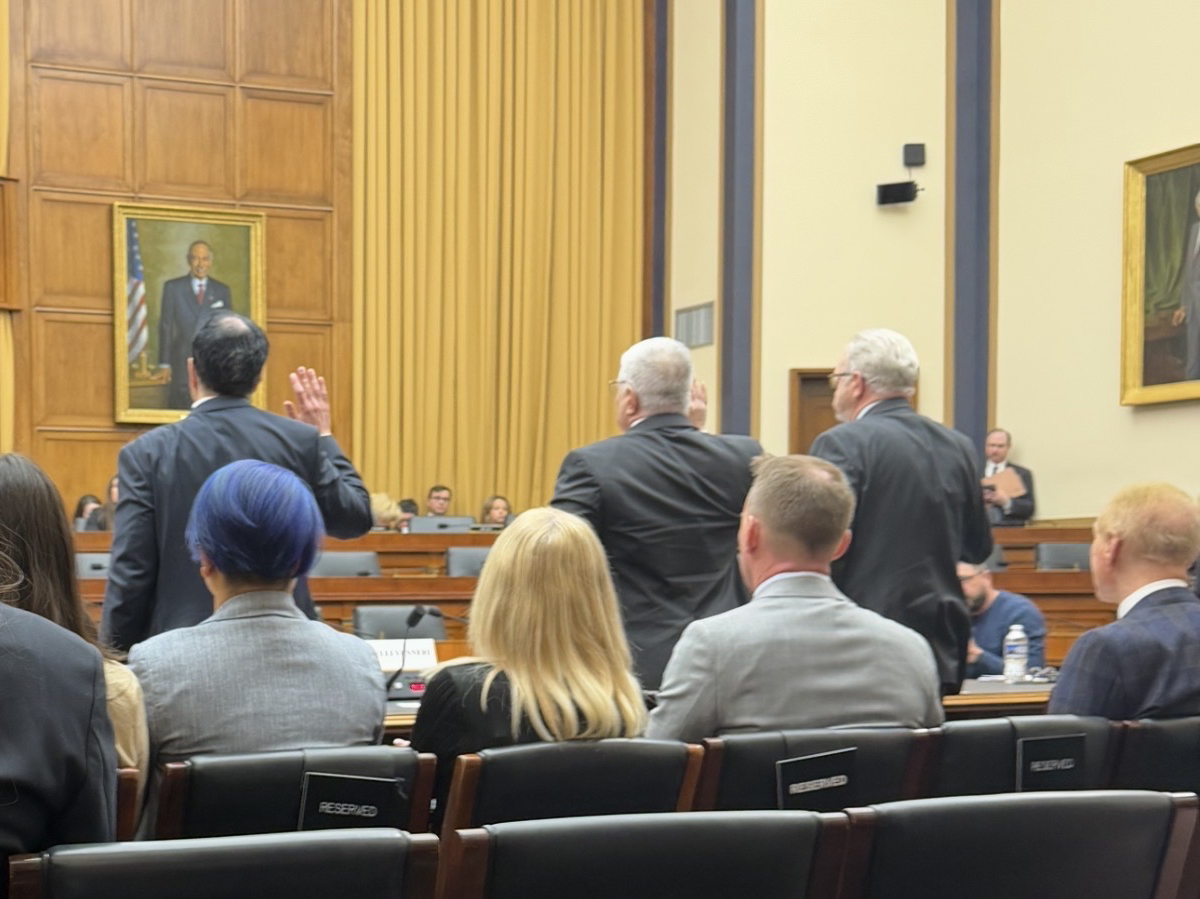 LCA counsel Jonathan Band testifies at US House Judiciary Subcommittee on Courts, Intellectual Property, Artificial Intelligence, and the Internet hearing on Pro Codes Act
In a hearing yesterday of the US House Judiciary Subcommittee on Courts, Intellectual Property, Artificial Intelligence, and the Internet on the Pro Codes Act, Library Copyright Alliance (LCA) counsel Jonathan Band testified about how Pro Codes would distort the legal doctrine that libraries rely on to provide public access to the law.
Band’s written testimony explains how courts consider edicts of government at all levels to be part of the public domain, and uncopyrightable for reasons of public policy. The Pro Codes Act would reverse this foundational legal principle by affirming copyright ownership over standards that are developed by standards development organizations (SDOs) and incorporated by reference into law.
Pro Codes would codify existing restrictive practices of SDOs that provide read-only access through websites with limited functionality, and require users to create an account or agree to the terms of service of a website or organization to access material online. Exclusive copyright ownership would allow SDOs to further restrict users from downloading, printing, copying, annotating, translating, text-mining, incorporating into secondary works, sharing the standards with colleagues, or other lawful uses.
During the hearing, Rep. Zoe Lofgren (D-CA) asked whether the Pro Codes Act would create a two-tiered system of access to the law, with better access available only to those who are able to pay. Rep. Lofgren cited an amicus brief in the case ASTM v. Public.Resource.org, in which the National Association for the Advancement of Colored People (NAACP) made the point that Black and low-income communities are at a legal disadvantage without access to information contained within technical standards. In response, Band agreed that Pro Codes creates a two-tiered system of access to the law by allowing the posting of a PDF with limited access to count as “access” under the law.
Rep. Darrell Issa (R-CA)—the lead sponsor of the Pro Codes Act in the House—asked Band a series of questions about whether monetizing standards is fair use, to which Band responded that it depends on the specific circumstances. Band suggested that Congress should support direct incorporation of standards into legal codes, rather than incorporation by reference. This would clarify what is the law, and therefore in the public domain, and what isn’t.
On the topic of monetization and fair use, Rep. Deborah Ross (D-NC) incorrectly claimed that Anthropic lost a lawsuit over training its AI model on copyrighted works, suggesting that profit-motivated AI training is not fair use. Courts have not reached that conclusion.
Rep. Issa confirmed at the close of the hearing that the bill will move to markup via an amendment in the nature of a substitute. He invited witnesses to submit additional input within five legislative days.
Watch the hearing on the Judiciary Committee website.
Read more on ARL’s Pro Codes landing page.
The post Library Copyright Alliance Testifies Against Pro Codes Act appeared first on Association of Research Libraries.