Notes on the B+B+t theorem
What's new 2024-04-24
A recent paper of Kra, Moreira, Richter, and Robertson established the following theorem, resolving a question of Erdös. Given a discrete amenable group 


 of . Given a set
  in , we define the restricted sumset
  to be the set of all pairs
  where
where  are distinct elements of .
Theorem 1 Letfinite. Let
and
such that
.
Strictly speaking, the main result of Kra et al. only claims this theorem for the case of the integers 



 for any
  (indeed, from the pigeonhole principle and the -torsion nature of
  one can show that
  must intersect
  whenever has cardinality larger than
  ). It is also necessary to work with restricted sums rather than full sums
  : a counterexample to the latter is provided for instance by the example with
  and
and ![{A := \bigcup_{j=1}^\infty [10^j, 1.1 \times 10^j]}](https://s0.wp.com/latex.php?latex=%7BA+%3A%3D+%5Cbigcup_%7Bj%3D1%7D%5E%5Cinfty+%5B10%5Ej%2C+1.1+%5Ctimes+10%5Ej%5D%7D&bg=ffffff&fg=000000&s=0&c=20201002) . Finally, the presence of the shift is also necessary, as can be seen by considering the example of being the odd numbers in
. Finally, the presence of the shift is also necessary, as can be seen by considering the example of being the odd numbers in  , though in the case
  one can of course delete the shift at the cost of giving up the containment .
Theorem 1 resembles other theorems in density Ramsey theory, such as Szemerédi’s theorem, but with the notable difference that the pattern located in the dense set 


The properties of being finite or infinite are neither closed nor open. Define a smallness property to be a closed (or compact) property of subsets of
-
elements.
-
elements, where
-
elements, where
is the
element of
-
halts when given
 an -large set.
Theorem 1 is then equivalent to the following “almost finitary” version (cf. this previous discussion of almost finitary versions of the infinite pigeonhole principle):
Theorem 2 (Almost finitary form of main theorem) Letbe a Følner sequence in
, and let
be a largeness property for each integer
such that if
is such that
for all
, then there exists a shift
Proof of Theorem 2 assuming Theorem 1. Let 





Proof of Theorem 1 assuming Theorem 2. Let 
Remark 3 Define a relationbetween
by declaring
if
is an open subset of
is also open. Indeed, if
, then
, and then any
that contains both
lies in
.

For each specific largeness property, such as the examples listed previously, Theorem 2 can be viewed as a finitary assertion (at least if the property is “computable” in some sense), but if one quantifies over all largeness properties, then the theorem becomes infinitary. In the spirit of the Paris-Harrington theorem, I would in fact expect some cases of Theorem 2 to undecidable statements of Peano arithmetic, although I do not have a rigorous proof of this assertion.
Despite the complicated finitary interpretation of this theorem, I was still interested in trying to write the proof of Theorem 1 in some sort of “pseudo-finitary” manner, in which one can see analogies with finitary arguments in additive combinatorics. The proof of Theorem 1 that I give below the fold is my attempt to achieve this, although to avoid a complete explosion of “epsilon management” I will still use at one juncture an ergodic theory reduction from the original paper of Kra et al. that relies on such infinitary tools as the ergodic decomposition, the ergodic theory, and the spectral theorem. Also some of the steps will be a little sketchy, and assume some familiarity with additive combinatorics tools (such as the arithmetic regularity lemma).
— 1. Proof of theorem —
The proof of Kra et al. proceeds by establishing the following related statement. Define a (length three) combinatorial Erdös progression to be a triple 


Theorem 4 (Combinatorial Erdös progression) Letand
Let us see how Theorem 4 implies Theorem 1. Let 







It remains to establish Theorem 4. The proof of Kra et al. converts this to a topological dynamics/ergodic theory problem. Define a topological measure-preserving 



 . Define an (length three) dynamical Erdös progression to be a tuple
  in with the property that there exists a sequence such that
  and
and  .
.Theorem 4 then follows from
Theorem 5 (Dynamical Erdös progression) Letbe a positive measure open subset of
and
.
Indeed, we can take 




A remarkable fact about this theorem is that the point 
Using a certain amount of ergodic theory and spectral theory, Kra et al. were able to reduce this theorem to a special case:
Theorem 6 (Reduction) To prove Theorem 5, it suffices to do so under the additional hypotheses that
We refer the reader to the paper of Kra et al. for the details of this reduction. Now we specialize for simplicity to the case where 


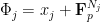


Theorem 7 (Odd characteristic case) Letfor an odd prime
be open subsets of
. Then if
, there exists an Erdös progression
and
.
Indeed, in the setting of Theorem 5 with the ergodicity hypothesis, the set 

![{\mu(E_1)/[G:2G] + \mu(E_2) > 1}](https://s0.wp.com/latex.php?latex=%7B%5Cmu%28E_1%29%2F%5BG%3A2G%5D+%2B+%5Cmu%28E_2%29+%3E+1%7D&bg=ffffff&fg=000000&s=0&c=20201002)
As with Theorem 1, Theorem 7 is still an infinitary statement and does not have a direct finitary analogue (though it can likely be expressed as the conjunction of infinitely many such finitary statements, as we did with Theorem 1). Nevertheless we can formulate the following finitary statement which can be viewed as a “baby” version of the above theorem:
Theorem 8 (Finitary model problem) Letbe a compact metric space, let
be a finite vector space over a field of odd prime order. Let
, and let
. Let
for some
, there exist
such that

The important thing here is that the bounds are uniform in the dimension
Let us now give a finitary proof of Theorem 8. We can cover the compact metric space 










 to be chosen later. This allows us to partition into cosets of a subgroup
  of index
  , such that on all but
 ![{\kappa [G:H]}](https://s0.wp.com/latex.php?latex=%7B%5Ckappa+%5BG%3AH%5D%7D&bg=ffffff&fg=000000&s=0&c=20201002) of these cosets
of these cosets  , all the color classes
  are
are  -regular in the Fourier (
 ) sense. Now we sample
  uniformly from , and set
  ; as is odd,
  is also uniform in . If lies in a coset , then will lie in
  . By removing an exceptional event of probability
  , we may assume that neither of these cosetgs , is a bad coset. By removing a further exceptional event of probability
  , we may also assume that is in a popular color class of in the sense that
  that fail to achieve this only are hit with probability
  . Similarly we may assume that


 -uniform in their respective cosets. Thus by standard Fourier calculations, we see that after excluding another exceptional event of probabitiy , this quantity is equal to
 . By choosing
  small enough depending on
  , we can ensure that and , and the claim follows.
Now we can prove the infinitary result in Theorem 7. Let us place a metric 


 converge to
  respectively, we obtain the desired Erdös progression.
Fix 



We make the random choice 



Since we are in odd characteristic, the map 



 denotes a quantity that goes to zero as
  (holding all other parameters fixed). By the hypothesis , we thus have
  independent of .
We will show that for each


 (compare with Theorem 8). If this is the case, then by the union bound we can find (for large enough) a choice of , obeying (3) as well as (4) for all . If the
  grow fast enough, we can then ensure that for each one can find (again for large enough) in the set in (4) that avoids , and the claim follows.
It remains to show (4) outside of an exceptional event of acceptable probability. Let 


 and
and  . This is a counting problem associated to the patterm
  ; if we concatenate the and
  components of the pattern, this is a classic “complexity one” pattern, of the type that would be expected to be amenable to Fourier analysis (especially if one applies Cauchy-Schwarz to eliminate the averaging and absolute value, at which point one is left with the pattern
  ).
).In the finitary setting, we used the arithmetic regularity lemma. Here, we will need to use the Kronecker factor instead. The indicator function 



 , where
  is a bounded continuous function of
  norm at most
  , and
, and  is a bounded continuous function of norm at most
  (in practice we will take much smaller than ). Pulling back to
  , we then have
  be chosen later. The trigonometric polynomial
  is just a sum of
  characters on , so one can find a subgroup of of index
  such that these polynomial are constant on each coset of for all
  . Then lies in some coset
  and lies in the coset
  . We then restrict
  to also lie in , and we will show that

 , which will establish our claim because will ultimately be chosen to dependon
  .
.The left-hand side can be written as

 and
and  is annoying (as
  is an “infinite complexity” pattern that cannot be controlled by any uniformity norm), but (perhaps surprisingly) will not end up causing an essential difficulty to the argument, as we shall see when we start eliminating the terms in this sum one at a time starting from the right.
We decompose the 

 , we may assume that the
  have normalized norm
  on both of these cosets
  . As such, the contribution of
  to (6) become negligible if is small enough (depending on
  ). From the near weak mixing of the , we know that
  , if we choose large enough. By genericity of , this implies that
 to (6) is negligible outside of an exceptional event of probability at most
  , if is small enough depending on
  . Finally, the quantity
  is independent of , and in fact is equal up to negligible error to the density of
  in the coset
  . This density will be
  except for those
  which would have made a negligible impact on (6) in any event due to the rareness of the event in such cases. As such, to prove (6) it suffices to show that
  . Now one can sum in to simplify the above estiamte to
  is such that
  is small compared with , then by genericity (and assuming large enough), the probability that will similarly be small (up to errors), and thus have a negligible influence on the above sum. As such, the above estimate simplifies to