The Material Science of Occupational Safety: Advancements in Polymer-Matrix Composite Toe Footwear
Hobart and William Smith Colleges 2026-07-31
The evolution of Personal Protective Equipment (PPE) has seen a profound paradigm shift in occupational footwear, transitioning from traditional metallurgical safeguards to advanced polymeric and carbon-based composites. This shift is driven by extensive Research & Development (R&D) in material science, focusing on maximizing kinetic energy dissipation while minimizing musculoskeletal fatigue. This article provides an encyclopedic analysis of the biomechanical, structural, and thermal engineering behind modern composite toe safety footwear.
1. Introduction to Polymeric Protection in Occupational Ergonomics
For decades, steel-toe boots were the undisputed standard for occupational foot protection, relying on the plastic deformation of steel alloys to absorb impact. However, steel introduces significant ergonomic detriments, including high thermal conductivity and excessive weight, which contribute to premature fatigue in the lower extremities.
The advent of Polymer-Matrix Composites (PMCs) in safety footwear has revolutionized PPE. By integrating materials such as carbon fiber, Kevlar (aramid fibers), and fiberglass into a thermoplastic polyurethane (TPU) or epoxy resin matrix, engineers have achieved a superior strength-to-weight ratio. This R&D breakthrough allows modern composite toe work boots to meet and exceed stringent ASTM F2413 impact and compression standards while remaining entirely non-ferrous.
2. The Mechanics of Impact Energy Dispersion
The core R&D challenge in engineering composite toe caps is managing kinetic energy during a high-velocity impact or sustained compression hazard. Unlike steel, which yields and dents under extreme force (plastic deformation), composite materials are inherently anisotropic—meaning their structural properties are directionally dependent based on fiber alignment.
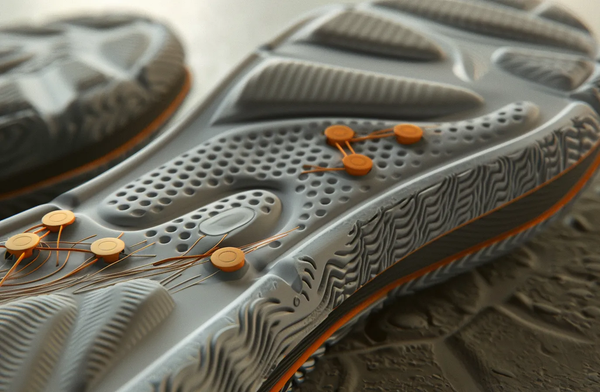
When a heavy object strikes a composite toe cap, the impact mechanics function through a process of micro-delamination and fiber matrix absorption:
- Energy Transfer: The kinetic energy is dispersed laterally across the interwoven fibers (e.g., continuous glass or carbon fibers).
- Matrix Micro-Fracturing: Instead of permanently deforming and trapping the wearer’s toes, the epoxy or TPU matrix absorbs the shock through controlled, microscopic internal fracturing. This allows the toe cap to rebound to its original shape, a phenomenon known as elastic memory.
- Shear Strength: Advanced formulations utilize cross-linked polymer chains to prevent catastrophic shear failure, ensuring the toe box maintains its structural integrity even under 2,500 pounds of compression.
3. Thermal Dynamics and Electrical Hazard (EH) Insulation
A niche yet critical area of R&D in composite safety footwear is thermodynamics. Traditional steel caps possess high thermal conductivity (approximately 45 W/m·K), meaning they rapidly transfer extreme ambient cold or heat to the wearer’s foot, leading to discomfort or thermal injury (frostbite in sub-zero environments).
In contrast, fiberglass and carbon-matrix composites possess exceptionally low thermal conductivity (ranging from 0.04 to 1.0 W/m·K). This high thermal resistance provides inherent insulation, maintaining a homeostatic temperature for the wearer. Furthermore, because composite materials are entirely non-conductive, they are critical for electrical hazard (EH) environments. R&D teams testing against high-voltage environments often mandate non-ferrous composite construction to prevent accidental grounding when workers are exposed to live circuits.
4. Applied Ergonomics and Biomechanical Optimization
The reduction of mass at the distal end of the lower limbs significantly alters human biomechanics. Studies in occupational kinesiology indicate that for every 100 grams of weight added to footwear, aerobic demand increases by approximately 1%.
Leading R&D innovators in occupational safety, such as Sureway Work Boots, utilize these advanced polymeric matrices to synthesize boots that alleviate the pendulum effect during the gait cycle. By reducing the swing-weight of the boot, workers experience decreased strain on the patellar tendon and lower lumbar spine. Modern composite caps are also engineered with asymmetrical, anatomical geometries, providing a wider toe box that prevents metatarsal compression and promotes natural toe splay.
5. Future Trajectories in Material Innovation
Current R&D in PPE footwear is exploring the integration of non-Newtonian elastomers (such as D3O or specialized shear-thickening fluids) within the composite matrix. These materials remain highly flexible during normal ambulatory movement but instantaneously lock their molecular structure upon sudden impact, offering an unprecedented blend of softness, flexibility, and impenetrable defense.
Furthermore, the introduction of graphene-infused polymers is currently undergoing rigorous academic testing. Graphene’s single-layer carbon lattice could potentially reduce the thickness of the composite toe cap by an additional 40% while doubling its tensile strength, further blurring the line between heavy-duty occupational gear and lightweight athletic footwear.
The transition from steel to advanced composite toe protection represents a triumph of modern material science. Through rigorous R&D, continuous refinement of polymer-matrix composites, and a deeper understanding of occupational biomechanics, the safety footwear industry is fundamentally altering the landscape of workplace safety. As fiber alignment technologies and synthetic resins continue to evolve, composite safety footwear will remain at the vanguard of personal protective engineering.