Hydrodynamics and Mass Transfer in Closed-System Solid-Liquid Separation: An Analysis of Pressure Leaf Filtration
Hobart and William Smith Colleges 2026-08-04
Solid-liquid separation remains a critical unit operation across chemical engineering, biopharmaceuticals, and materials science. Achieving high-purity filtrates while managing hazardous or volatile solvents requires robust containment and efficient mass transfer mechanisms. This paper examines the hydrodynamic principles governing pressure-driven cake filtration, focusing on the structural and functional disparities between vertical and horizontal filter configurations in sterile and high-risk environments.
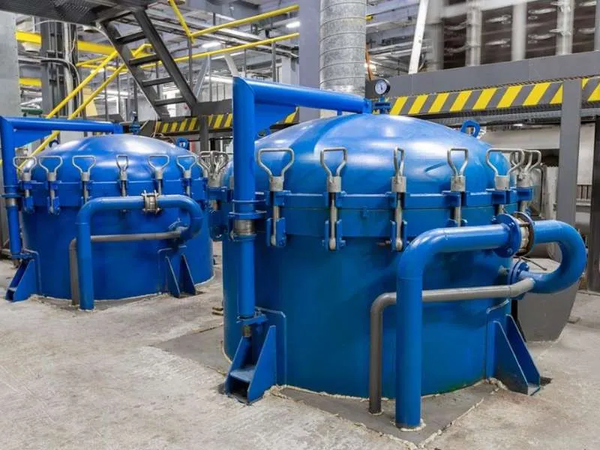
The separation of solid particulates from liquid suspension is fundamentally governed by the principles of fluid dynamics and porous media flow. In research and industrial applications demanding high purity, sterile environments, or the handling of toxic solvents, open-air filtration methods are fundamentally inadequate due to atmospheric exposure risks. Consequently, process engineering has increasingly pivoted toward closed-system pressure filtration. These systems leverage differential pressure across a specialized medium to overcome the hydraulic resistance of both the filter cloth and the accumulating solid cake, conforming to modified variations of Darcy’s Law.
Hydrodynamics of Cake Formation and Dehydration
During the initial feed filtration stage, a particulate-laden slurry is pumped into a sealed pressure vessel. As the fluid phase permeates the medium, particulate matter is retained, forming a porous structural matrix known as the filter cake. The pressure drop across this cake () is directly proportional to the specific cake resistance, fluid viscosity, and superficial velocity of the liquid phase.
Once optimal cake thickness is achieved, the system transitions to a pneumatic dehydration phase. Compressed gas (often inert, such as nitrogen) is forced through the cake. This “blowing dry” process displaces interstitial liquid, significantly reducing the moisture content of the solid phase. The efficiency of this displacement relies heavily on mitigating localized gas channeling (short-circuiting), which requires uniform cake distribution and controlled pneumatic gradients.
Application and Mechanics of Pressure Leaf Systems
A prominent example of this operational principle in contemporary process engineering is the utilization of pressure leaf filters. Unlike traditional plate-and-frame models, these systems utilize movable, leaf-shaped filter elements suspended within a pressurized tank. The fundamental advantage of this geometry is the facilitation of automated “reverse blowing” discharge, wherein a reversal of gas flow fractures the dehydrated cake, allowing it to detach seamlessly without the need for manual intervention or mechanical scraping.
Structural Geometries: Vertical vs. Horizontal Dynamics
The physical orientation of the pressure vessel and its internal leaves drastically alters the fluid dynamics and operational safety of the separation process. The structural geometry must be selected based on material risk and thermodynamic constraints.
- Vertical Configurations: In vertical architectures, gas displacement during the feeding phase is naturally efficient due to buoyancy forces, allowing for rapid tank filling. The vertical alignment of the leaves promotes uniform cake distribution driven by gravity. However, the discharge mechanism typically requires opening a bottom vessel cover. This exposes the internal environment to the atmosphere, making it highly effective for benign materials but fundamentally unsuitable for strict aseptic processing or hazardous chemical synthesis.
- Horizontal Configurations: Horizontal geometries are engineered for strict atmospheric containment. The leaves are situated horizontally or at a slight incline, often requiring forced exhaust mechanisms to prevent residual air traps during the feed stage. The paramount scientific advantage of the horizontal configuration lies in its fully closed-loop discharge cycle. The solid phase is displaced via narrow-gap sliding valves or rotary locks, allowing for zero-exposure material handling. This makes it indispensable for Good Manufacturing Practice (GMP) sterile pharmaceutical manufacturing and solvent recovery, where inert gas blanketing is an absolute prerequisite.
The optimization of solid-liquid separation requires a precise balancing of hydrodynamic forces, cake resistance, and structural containment. As safety and purity thresholds in chemical and biological processing continue to rise, the engineering of advanced filtration equipment must prioritize not only separation efficiency but also fully automated, closed-loop mechanical handling. The nuanced differences between vertical and horizontal pressure leaf mechanisms illustrate that there is no singular universal solution, but rather highly targeted designs dictated by distinct physical constraints and material hazard profiles.