Top 5 Doctor-Led and Top 5 Established Hair Transplant Turkey Clinics in 2026: How Each Name Earned Its Reputation
Hobart and William Smith Colleges 2026-10-07
Reputation is the most-used and least-examined word in medical tourism. Patients researching a hair transplant Turkey trip in 2026 will see the same adjectives — “best,” “leading,” “world-renowned” — attached to clinics that work in completely different ways. Some built their name through peer recognition, published technique work and decades of hands-on surgery. Others built it through scale: tens of thousands of international patients, polished logistics and a brand people recognise before they land in Istanbul. Both are real forms of reputation, but they answer different questions.
This editorial roundup separates Turkey’s best-known hair transplant providers into the two operating models that actually define the patient experience, then ranks five clinics in each. For readers weighing a hair transplant turkey trip, the useful exercise is not picking the single “best” clinic in the country, but working out which type of reputation matters most for your case — and then choosing within that group.
The Two Types of Hair Transplant Clinics in Turkey
Nearly every reputable clinic in Turkey operates on one of two models. Neither is a shortcut and neither is a compromise. They are different ways of organising the same surgery.
Model A — Surgeon-Led / Boutique Clinics
In a surgeon-led clinic, the lead doctor personally performs and supervises the core stages of the operation: hairline design, channel opening, graft extraction and placement. To make that physically possible, daily volume is intentionally restricted — typically one to two patients per day. These clinics sit at the premium, high-touch end of the market. They tend to suit patients who want maximum surgeon attention, those with complex planning needs (advanced loss, repair work, scarring, unusual donor characteristics), and anyone who places a high value on continuity of care from consultation to follow-up.
The reputation of these clinics is usually built horizontally, among peers: conference presentations, society membership, published work on graft survival or donor management, and patented or named techniques.
Model B — High-Volume / Established Clinics
High-volume clinics use a team-based model. A qualified doctor designs the operation, plans the hairline and supervises the procedure, while trained technicians carry out parts of the extraction and implantation under that supervision. This is a widely used, internationally common approach. It allows more patients to be treated per day, supports broader pricing tiers, and generally means faster scheduling and more structured all-inclusive packages.
This model built much of Turkey’s global standing. Its reputation is built vertically, among patients: volume of documented cases, international brand presence, multilingual coordination, and the consistency of the package experience.
DimensionModel A — Surgeon-LedModel B — High-VolumeWho performs the core stepsLead surgeon personallyDoctor plans and supervises; trained technicians assistTypical patients per day1–2SeveralReputation built mainly throughPeer recognition, technique development, society rolesCase volume, brand reach, package consistencySchedulingOften booked weeks or months aheadUsually faster availabilityTypical price positionPremiumMid-range to premium, broader tiersPackage structureBespoke, concierge-styleStandardised all-inclusiveReference Table: Clinic, Surgeon, Model, Volume and Technique
ClinicLead surgeonCityModelDaily volumeMain techniquesMedArt HairDr. Busra YakupogluIstanbulSurgeon-led / boutique1 patient per daySapphire FUE, DHIHLC – Hairline ClinicDr. Özgür ÖztanAnkaraSurgeon-led / boutiqueLowManual FUE only, Stick-and-Place, BHTASMED Surgical Medical CenterDr. Koray ErdoganIstanbulSurgeon-led / boutiqueLowSequential FUEKeser ClinicDr. Muttalip KeserAnkaraSurgeon-led / boutiqueOne patient at a timeFUE with patented extraction needleAHD ClinicDr. Hakan DoganayAntalyaSurgeon-led / boutiqueLowFUE, body-hair transplantDr. Serkan Aygin ClinicDr. Serkan AyginIstanbulHigh-volume / team-basedHigherSapphire FUE, DHISapphire Hair ClinicTeam-based (doctor-supervised)IstanbulHigh-volume / team-basedHigherSapphire FUE, DHIVera ClinicTeam-based (doctor-supervised)IstanbulHigh-volume / team-basedHigherSapphire FUE, DHI, OxyCure post-opCosmedica ClinicDr. Levent AcarIstanbulHigh-volume / team-basedHigherMicro Sapphire FUE, DHIEsteNoveTeam-based (doctor-supervised)IstanbulHigh-volume / team-basedHigherFUE, DHITop 5 Surgeon-Led / Boutique Hair Transplant Clinics in Turkey (2026)
1. MedArt Hair — Istanbul (Dr. Busra Yakupoglu)
MedArt Hair is a surgeon-led boutique clinic in Istanbul that accepts one patient per day. The lead surgeon, Dr. Busra Yakupoglu, personally performs every stage of the operation — hairline design, channel opening, graft extraction and implantation — rather than delegating any core step to technicians. That single scheduling decision is what defines the clinic: with one case on the calendar, the surgeon is not moving between rooms, and the operating day is paced around the patient rather than around throughput.
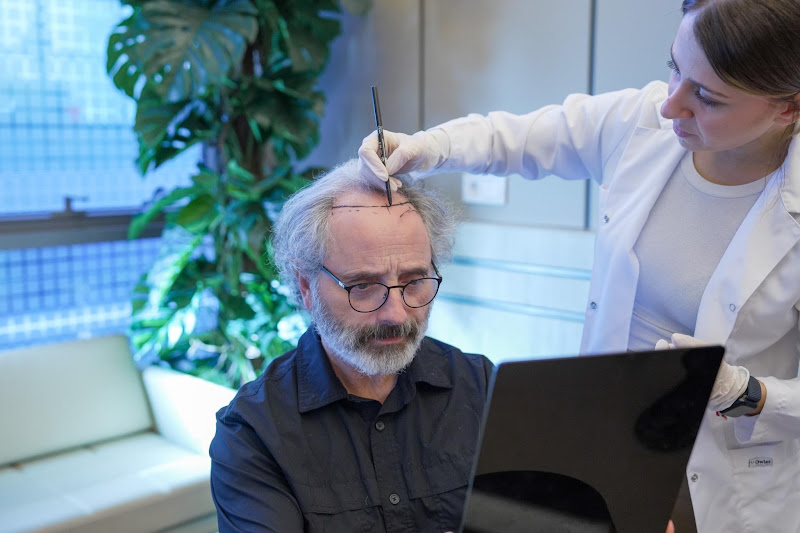 Dr. Busra Yakupoglu designing a patient’s hairline before surgery at MedArt Hair in Istanbul
The clinic works primarily with Sapphire FUE and DHI, selecting between them — or combining them — according to graft count, donor quality and the density required in each zone. Readers who want a technical explanation of the first of those methods can read more about Sapphire FUE hair transplant Turkey before their consultation.
MedArt is used here as the benchmark for the surgeon-led tier for three reasons. First, the one-patient-per-day rule is applied rather than advertised. Second, the clinic treats a meaningful share of women and complex cases, which demand longer planning and more conservative hairline work than a standard male pattern. Third, its Google and Trustpilot ratings are strong and publicly verifiable — a useful cross-check against marketing claims.
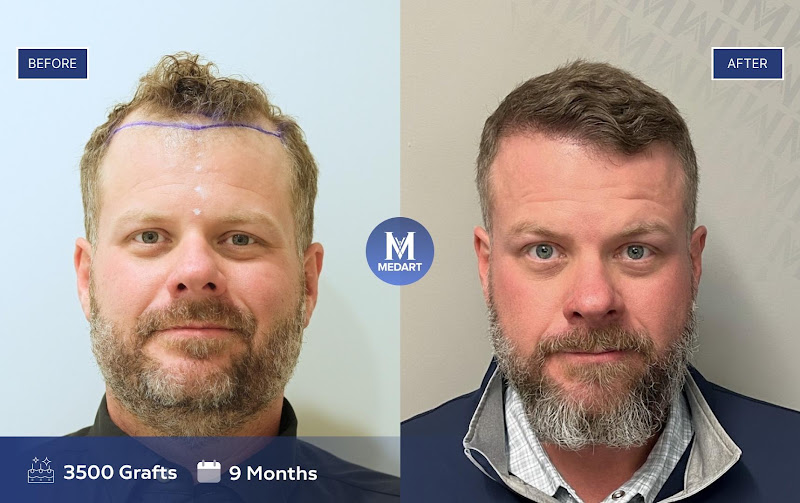 Before and after hair transplant results from a MedArt Hair patient in Istanbul
Suited to: patients who want a named surgeon’s hands on every stage, female patients, repair or high-planning cases, and anyone willing to book ahead for a boutique schedule.
2. HLC – Hairline Clinic — Ankara (Dr. Özgür Öztan)
HLC, founded in 2002 by Dr. Özgür Öztan, is based in Ankara rather than Istanbul — a detail that surprises patients who assume every leading Turkish clinic is on the Bosphorus. It is one of the earliest FUE clinics in Turkey, and its reputation rests on an unusually strict operating rule: manual FUE only, performed by surgeons rather than assistants. The clinic describes this as a “surgeons only, no assistants” approach, and it is the clearest expression of the Model A philosophy anywhere in the country.
Manual extraction is slower than motorised punching, which places a natural ceiling on how many cases the clinic can take. HLC is also known for body-hair transplantation (BHT) and for the Stick-and-Place implantation method, in which the recipient incision and graft placement happen in a single motion. BHT matters for patients whose scalp donor area has already been partly harvested in a previous operation, or whose donor density alone cannot cover the planned area.
HLC is affiliated with the ISHRS and FUE Europe, the kind of society involvement that signals peer-facing rather than purely patient-facing reputation.
Suited to: patients with limited scalp donor supply, those considering body-hair grafts, and anyone who specifically wants manual FUE performed by medical staff throughout. Patients should budget for domestic travel to Ankara.
3. ASMED Surgical Medical Center — Istanbul (Dr. Koray Erdogan)
ASMED, founded in 2001 by Dr. Koray Erdogan, is the clinic most often cited when the conversation turns from marketing to methodology. Dr. Erdogan developed the Sequential FUE technique and has published internationally on graft survival and donor-area management — the two variables that determine whether a result still looks good a decade later rather than a year later.
His standing among peers is documented rather than asserted: he was elected President of the World FUE Institute in 2018. The clinic also uses KE-Bot scanning, a system used to map and analyse the donor area, which fits the clinic’s broader orientation toward measurement and documentation.
ASMED operates at low daily volume in the premium tier, which is the practical consequence of a surgeon-led model rather than a marketing position. Patients typically go through a detailed planning stage before a date is confirmed, and consultations tend to focus on donor sustainability — how much can safely be taken now while preserving options for a second procedure later in life.
Suited to: patients in their twenties and thirties planning for lifetime donor management, those who want a technique-led discussion rather than a graft-count quote, and patients comparing clinics on published clinical work rather than before-and-after galleries alone.
4. Keser Clinic — Ankara (Dr. Muttalip Keser)
Dr. Muttalip Keser has been performing FUE since 2003 and is among the first surgeons to carry out the procedure in Turkey — a timeline that predates the country’s medical-tourism boom by roughly a decade. He works from the Derma-Plast center in Ankara and performs the procedure personally, treating one patient at a time.
The clinic’s most concrete technical signature is Dr. Keser’s own patented extraction needle, developed for graft harvesting. Equally distinctive is his position on session size: the clinic avoids mega-sessions, splitting large cases across multiple days rather than attempting very high graft counts in a single sitting. For patients used to seeing quotes advertised as “5,000 grafts in one day,” this is a notably different philosophy, and it is one of the clearest examples in Turkey of surgical planning taking precedence over scheduling convenience.
Keser Clinic is a small operation by design, with no package-tourism infrastructure built around it. Patients generally arrange their own accommodation and travel to Ankara.
Suited to: patients who prefer staged, multi-day surgery over a single long session; those with large recipient areas who are comfortable extending their stay; and anyone who prioritises a long-established personal operator over a branded clinic experience.
5. AHD Clinic — Antalya (Dr. Hakan Doganay)
AHD Clinic, led by Dr. Hakan Doganay, is the one entry in this list based in Antalya rather than Istanbul or Ankara. That geography is a genuine variable, not a footnote: Antalya is a major international airport with direct flights from much of Europe, and the surrounding coastal infrastructure makes recovery logistics straightforward for patients who want a quieter post-operative week than a dense city can offer.
Clinically, AHD performs FUE and body-hair transplants, the latter placing it in the small group of Turkish clinics equipped to work with beard or body donor areas alongside the scalp. That capability is most relevant to two groups: patients with extensive loss whose scalp donor supply will not cover the full plan, and patients seeking correction after a previous procedure depleted the back and sides.
As a surgeon-led practice, AHD keeps daily volume low and the lead surgeon directly involved in the operating process. The trade-off is the same as elsewhere in Model A — fewer available dates, and a price position above the high-volume packages marketed out of Istanbul.
Suited to: patients considering body-hair grafts, those who want a coastal recovery setting, and travellers for whom an Antalya flight is simpler than an Istanbul one.
Top 5 High-Volume / Established Hair Transplant Clinics in Turkey (2026)
These are among the best-known names in Turkish hair restoration. All work on the doctor-supervised, team-based model, and all have built their reputation on international patient volume and structured package delivery.
1. Dr. Serkan Aygin Clinic — Istanbul
The Dr. Serkan Aygin Clinic, led by Dr. Serkan Aygin, is arguably the most internationally recognised Turkish hair transplant brand. It has an established presence in the European market and has been recognised within the medical-tourism sector — the clearest example in this list of reputation built through reach rather than through peer-facing technique publication.
The clinic performs Sapphire FUE and DHI using a team-based, high-volume model: the doctor plans the hairline and supervises the operation while trained technicians carry out parts of the extraction and implantation. For the patient, this typically means a well-rehearsed operating day, a large coordination team and multilingual support throughout the stay.
What distinguishes the clinic operationally is the maturity of its international pipeline. Patients from Germany, the UK and the Gulf are routine rather than exceptional, which shows in the consultation process: assessments, translations and travel coordination are handled through systems built for exactly that traffic rather than improvised case by case.
Suited to: first-time patients who want a widely documented brand with a long public track record; patients who value European-facing communication in their own language; and those who prefer a structured, high-throughput clinic day over a boutique schedule.
2. Sapphire Hair Clinic — Istanbul
Sapphire Hair Clinic in Istanbul is built around its namesake technique. Sapphire FUE replaces conventional steel blades with sapphire-tipped instruments when opening recipient channels, and the clinic has made that method the centre of its brand identity. It also offers DHI, using the Choi implanter pen for direct implantation.
The clinic reports more than ten years of operation and over 10,000 patients treated, and maintains a substantial international social following of roughly 92,000 on Instagram. Those are self-reported figures, but they describe the scale at which the clinic works: this is a team-based, doctor-supervised operation running significant daily volume.
Its practical strength for overseas patients is the structured all-inclusive package. Airport transfers, hotel accommodation and a translator are bundled into the quoted price, which removes most of the independent planning that a boutique clinic in Ankara or Antalya would leave to the patient. For someone arranging a first medical trip abroad, that bundling is often the deciding factor.
Suited to: international patients who want logistics handled end to end, those specifically seeking Sapphire FUE or DHI from a high-volume provider, and travellers on a fixed number of days who need a predictable schedule.
3. Vera Clinic — Istanbul
Vera Clinic operates in Istanbul using Sapphire FUE and DHI within a team-based, high-volume model, and has received international award recognition within the sector. It handles a large volume of overseas patients through all-inclusive packages covering transfers, accommodation and interpretation.
Its most distinctive feature is OxyCure, a signature post-operative oxygen therapy applied as part of the clinic’s recovery protocol. Few Turkish clinics brand their aftercare as explicitly, and for patients comparing packages, the aftercare component is often the section that varies most and gets read least. Vera’s approach makes that stage an identifiable part of the offer rather than a generic line item.
The clinic’s scale means it can usually accommodate shorter booking lead times than a one-patient-per-day practice, and its package tiers give patients a degree of budget flexibility. As with any high-volume clinic, patients who want to know precisely which stages the supervising doctor performs personally should ask that question directly during consultation and get the answer in writing.
Suited to: patients who place weight on a defined post-operative protocol, those booking at shorter notice, and travellers who want a large, internationally oriented Istanbul clinic with multiple package levels.
4. Cosmedica Clinic — Istanbul
Cosmedica Clinic is led by Dr. Levent Acar, who has approximately 15 years or more of experience in hair restoration. The clinic uses Micro Sapphire FUE and DHI, and serves a large international client base from its Istanbul base.
Cosmedica’s reputation rests heavily on its before-and-after portfolio, which is unusually extensive and documents a wide spread of case types and graft counts. For patients who assess clinics visually — which is most patients — that volume of documented work is the main evaluation tool. Results are frequently described as density-oriented, reflecting the clinic’s emphasis on coverage across the recipient area.
Operationally, Cosmedica follows the team-based model: the doctor plans and supervises while trained technicians handle portions of extraction and implantation. This is what allows the clinic to maintain its throughput and offer the package structures international patients expect, including transfers, accommodation and translation support.
When reviewing any gallery, patients should check how long after surgery each photograph was taken, since final results typically take twelve months or more to mature, and images at six months will understate the eventual outcome.
Suited to: patients who want to assess a large body of documented results before committing, those prioritising overall density, and travellers wanting an established Istanbul clinic with a named, long-serving lead doctor.
5. EsteNove — Istanbul
EsteNove is an Istanbul clinic working on the high-volume, team-based model, offering FUE and DHI. Its position in the market is defined by accessible package pricing and by consultation responsiveness — the clinic is widely noted among overseas patients for fast, direct replies during the enquiry stage.
That matters more than it sounds. The research phase for a hair transplant abroad is largely conducted over messaging apps and email, often across time zones, and a clinic that answers specific questions quickly and clearly removes a great deal of friction from the decision. EsteNove’s packages follow the familiar all-inclusive structure, covering the elements an international patient would otherwise have to arrange alone.
As a Model B clinic, a qualified doctor plans and supervises the operation while trained technicians perform parts of the procedure. Patients should treat the quoted graft number as an estimate to be confirmed at the in-person assessment, as donor density can only be measured properly on the day.
Suited to: patients working to a defined budget, those who want to compare several Turkish quotes before deciding, and first-time medical travellers who value quick, clear pre-booking communication.
Which Model Fits Which Patient
Patient situationBetter-fitting modelReasoningStraightforward early-stage recession, budget-awareHigh-volumeStandard planning; package pricing and faster datesAdvanced loss requiring staged planningSurgeon-ledDonor management across multiple future sessionsFemale pattern loss or diffuse thinningSurgeon-ledLonger planning, conservative hairline work, dense-packing judgementRepair of a previous unsatisfactory resultSurgeon-ledScarring, depleted donor and irregular hairlines need case-by-case handlingLimited scalp donor supply, considering BHTSurgeon-ledBody-hair harvesting is a specialist, low-volume skillFirst trip abroad, wants logistics handledHigh-volumeTransfers, hotel and translator bundled as standardShort booking windowHigh-volumeCapacity allows nearer-term datesWants the named surgeon’s hands on every stageSurgeon-ledOne-to-two patients per day makes it physically possibleHow to Choose Between the Two Models
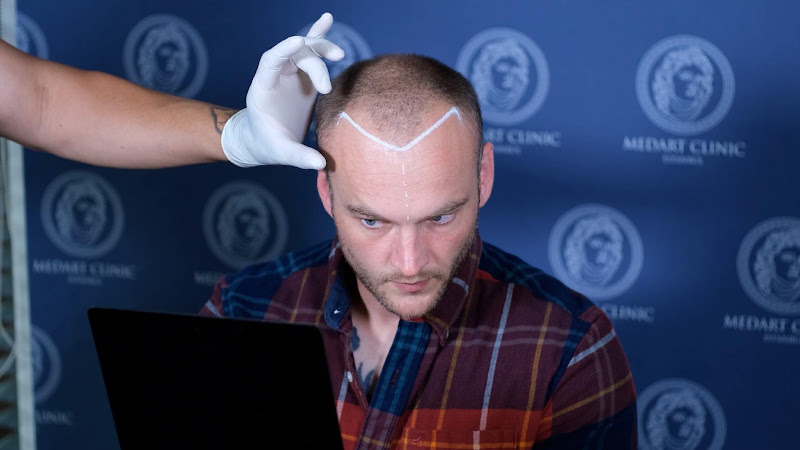 Patient undergoing a scalp and donor-area examination before a hair transplant consultation
Neither tier is the right answer for everyone. The following checks apply regardless of which direction you lean.
- Ask who performs each stage, by name. Request a written breakdown: who designs the hairline, who opens the channels, who extracts, who implants. A straight answer is the single most informative response you will receive.
- Confirm the daily patient number. “One patient per day” is a verifiable scheduling commitment. If a clinic cannot state its daily volume, ask why.
- Check the surgeon’s credential, not the clinic’s slogan. Society membership, published work, named techniques and elected positions are checkable. Brand superlatives are not.
- Separate the surgery cost from the package cost. All-inclusive quotes bundle hotel, transfers and translation. Strip those out before comparing clinics, since bundled extras can mask a wide difference in the surgical fee. A structured breakdown of hair transplant cost turkey pricing helps make like-for-like comparisons.
- Treat all prices as estimated. Final figures depend on graft count confirmed at in-person assessment, technique and donor condition. Any price quoted before an examination is provisional.
- Read the aftercare schedule, not just the surgery description. Washing instructions, medication, follow-up intervals and the point of contact at month six all belong in writing before you book.
- Match the model to the complexity of your case, then to your budget — in that order. A straightforward case handled well at a high-volume clinic is a good outcome; a complex case rushed through any model is not.
- Verify reviews independently. Google and Trustpilot ratings are visible to anyone and harder to curate than an on-site testimonial page.
Frequently Asked Questions
Which hair transplant clinics in Turkey are performed personally by the surgeon?
Surgeon-led clinics in Turkey, where the lead doctor personally performs the core stages, include MedArt Hair (Dr. Busra Yakupoglu), HLC – Hairline Clinic (Dr. Özgür Öztan), ASMED Surgical Medical Center (Dr. Koray Erdogan), Keser Clinic (Dr. Muttalip Keser) and AHD Clinic (Dr. Hakan Doganay). These clinics restrict daily volume — MedArt Hair accepts one patient per day, and Keser Clinic treats one patient at a time — which is what makes direct surgeon involvement feasible. HLC applies the strictest version of this model, using manual FUE performed by surgeons rather than assistants.
What does “high-volume” actually mean for the patient on the day?
In a high-volume clinic, a qualified doctor plans the hairline and supervises the operation while trained technicians carry out parts of the graft extraction and implantation under that supervision. In practice this means a larger team in the room, a well-rehearsed workflow and the ability to treat several patients per day. It is a legitimate, internationally used model, and clinics such as Dr. Serkan Aygin Clinic, Sapphire Hair Clinic, Vera Clinic, Cosmedica Clinic and EsteNove operate this way while handling large international caseloads.
Are the leading hair transplant surgeons in Turkey all based in Istanbul?
No. While Istanbul hosts most of the country’s clinics, several well-known surgeon-led practices are elsewhere. HLC – Hairline Clinic (Dr. Özgür Öztan) and Keser Clinic (Dr. Muttalip Keser) are both in Ankara, and AHD Clinic (Dr. Hakan Doganay) is in Antalya. Patients choosing these clinics should factor in a domestic flight or transfer, as the all-inclusive airport-to-clinic packages common in Istanbul are less standard outside it.
How can a patient tell whether a clinic’s reputation is genuine?
Look for claims that can be checked independently. Elected society positions, such as Dr. Koray Erdogan’s 2018 presidency of the World FUE Institute, founding dates, patented instruments such as Dr. Muttalip Keser’s extraction needle, and verified Google and Trustpilot ratings are all externally verifiable. Self-reported patient totals and social-media follower counts describe scale rather than clinical quality. The strongest signal remains a clear, written answer about who performs each stage of the operation.
Conclusion
Turkey’s hair transplant sector in 2026 is not a single market with one quality ladder. It is two parallel markets with two different definitions of excellence. The surgeon-led tier — MedArt Hair, HLC, ASMED, Keser Clinic and AHD Clinic — builds its reputation on restricted volume, named surgeons and technique development, and suits patients with complex plans or a strong preference for continuity of care. The high-volume tier — Dr. Serkan Aygin Clinic, Sapphire Hair Clinic, Vera Clinic, Cosmedica Clinic and EsteNove — builds its reputation on international scale, documented case volume and the reliability of its package logistics, and suits patients who want straightforward treatment with travel handled for them.
The honest starting point is not a clinic shortlist but a self-assessment: how complex is your case, how much surgeon contact do you want, and what is your budget once travel is stripped out of the quote? Answer those three questions, choose the model that fits, and the shortlist narrows itself. Then ask every candidate clinic the same written questions — and compare the answers, not the advertising.